
What Is OpenRouter AI tool and How Does It Help with AI Model Access?
In today’s fast-paced tech landscape, integrating powerful artificial intelligence into applications is no longer a luxury but a necessity for innovation. Many developers and businesses often ask, “what is this AI tool?” as they seek simpler, more efficient ways to harness the potential of large language models (LLMs). This platform emerges as a vital solution, streamlining the complex process of connecting your projects to a vast ecosystem of AI capabilities.
Understanding this platform is crucial for anyone looking to optimize their AI development workflow. It’s designed to simplify AI model access, offering a unified approach to what can otherwise be a fragmented and challenging task. By providing a central point for diverse AI models, this platform empowers you to build smarter applications without getting bogged down in the intricacies of individual provider APIs. Once you’re clear on What IsOpenRouter AI AI, our OpenRouter AI AI Review can help you decide whether it’s worth trying.
The Fragmentation Challenge: Juggling Multiple AI APIs and Providers
Imagine trying to build a complex machine using parts from dozens of different manufacturers, each with its own unique instructions and connectors. This is often the reality for developers and businesses aiming to integrate various AI models into their applications. The primary challenge lies in the sheer fragmentation of the AI landscape. Each powerful large language model (LLM) typically comes from a different provider, requiring its own specific API key, integration method, and documentation.
This leads to a cumbersome process of managing multiple API keys, understanding distinct data formats, and writing custom code for every single AI service. For a software engineer like Alex, this means spending valuable time on integration and maintenance rather than on core product innovation. The overhead quickly becomes a significant drain on resources, making it difficult to experiment with new models or switch providers efficiently.
Beyond Integration: The Hidden Costs and Reliability Headaches
The complexity doesn’t stop at integration; it extends into operational costs and reliability. Accessing premium AI models can be surprisingly expensive, and pricing structures vary wildly between providers, making it nearly impossible to compare costs accurately or predict monthly bills. Alex often worries about unexpected spikes in AI service bills, a common frustration when dealing with multiple vendors and their differing usage policies.
Furthermore, relying on a single AI model provider introduces a critical point of failure. If one provider experiences downtime, your entire AI-powered application could be affected, leading to service disruptions and unhappy users. Ensuring application stability and scalability becomes a constant battle against the inherent unreliability of individual AI components. This juggling act of cost-performance ratios and uptime guarantees adds significant stress to development teams.
Why These AI Integration Obstacles Slow Innovation and Drain Resources
These persistent challenges in AI integration are more than just minor inconveniences; they directly impact a company’s ability to innovate and compete. The time spent managing API keys, debugging integrations, and comparing model performance is time not spent building new features or improving user experience. For tech startups and SaaS companies, this operational inefficiency can translate into slower development cycles and missed opportunities to bring cutting-edge AI capabilities to market quickly.
The financial strain of unpredictable AI costs and the risk of application downtime can also be detrimental. High operational costs eat into budgets that could otherwise fund growth or further development, while service disruptions erode user trust and damage brand reputation. Ultimately, these obstacles create a bottleneck, limiting the ambition of AI-powered projects and preventing developers from leveraging the best AI models for specific tasks without significant overhead.
This AI Tool: Your Strategic Solution for Streamlined AI Integration
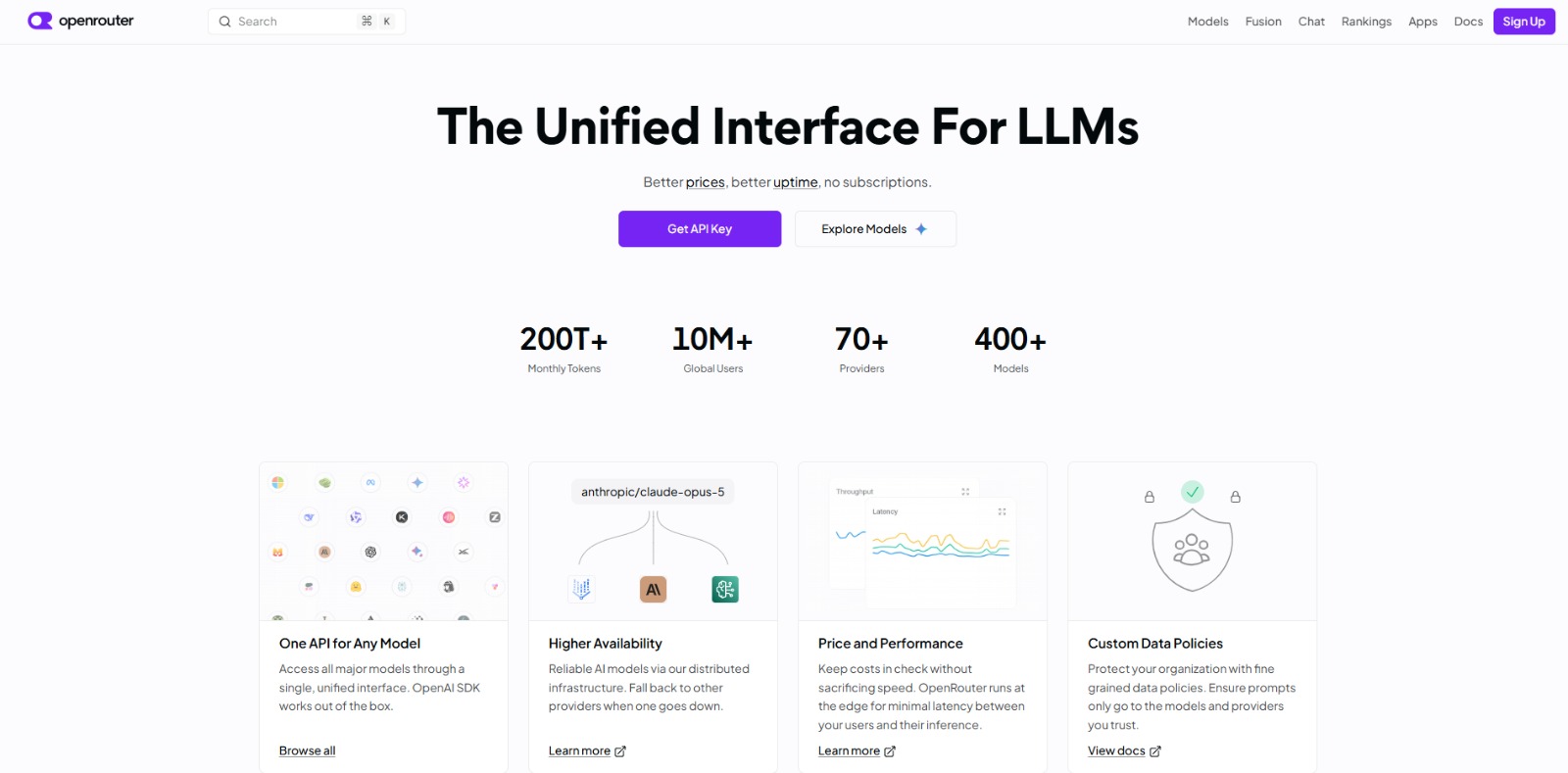
The good news is, you don’t have to navigate the fragmented AI landscape alone! This is precisely where this AI tool steps in as a game-changer. It acts as a powerful intermediary, a smart hub that connects your applications to a vast array of cutting-edge AI models from various providers, all through a single, unified API. Think of it as a universal adapter for all your AI needs, simplifying what was once a tangled web of integrations into a smooth, efficient pipeline.
This platform addresses the core pain points developers and businesses face, transforming complex, resource-intensive AI integration into a manageable and even enjoyable process. It’s designed to empower you to focus on building innovative features and delivering value to your users, rather than getting bogged down in API key management, data format conversions, or the endless pursuit of the “best” model. By centralizing access, this platform makes experimenting with different models, comparing their performance, and optimizing costs far more straightforward.
How this AI tool Generally Works to Unify AI Access
Understanding how this platform functions is key to appreciating its value. At its heart, this AI solution provides a single point of entry to a diverse ecosystem of large language models and other AI capabilities. Instead of integrating directly with multiple individual AI providers, your application communicates solely with this platform. This platform then intelligently routes your requests to the chosen AI model, handling all the underlying complexities on your behalf.
1. Connecting Your Application
The first step is typically to integrate your application with this platform’s API. This usually involves generating an API key from your dashboard and then configuring your application to send its AI-related requests to the platform’s endpoint. It’s a one-time setup that replaces the need for separate integrations with each individual AI provider, significantly reducing initial development effort.
2. Discovering and Selecting AI Models
Once connected, you gain access to this platform’s marketplace of available AI models. This marketplace often features a wide range of LLMs and other specialized AI tools, allowing you to browse, compare, and select the models best suited for your specific tasks. You might choose different models for different functionalities within your application – one for creative writing, another for summarization, and perhaps another for code generation.
3. Making Unified API Requests
With your application connected and models selected, you can then make API calls through this platform. The beauty here is that the format of your request remains consistent, regardless of which underlying AI model you’re targeting. This platform translates your unified request into the specific format required by the chosen provider and then returns the AI’s response back to your application in a standardized way. This abstraction layer is crucial for simplifying development and maintenance.
4. Managing and Optimizing Usage
This platform often provides tools for monitoring your AI usage across all integrated models. This includes tracking costs, performance metrics, and even model availability. This centralized oversight allows you to make informed decisions about which models to use, when to switch, and how to optimize your spending. It empowers you to fine-tune your AI strategy without the headache of juggling multiple dashboards and billing systems.
5. Seamlessly Switching Models
One of the most powerful aspects of this platform is the ability to switch between AI models with minimal code changes. If a new, more powerful, or more cost-effective model becomes available, or if a particular provider experiences downtime, you can often update your configuration within the platform to route requests to a different model. This flexibility ensures your application remains robust and adaptable, allowing you to leverage the best available AI technology at any given moment. For a deeper dive into how this AI tool can transform your workflow, consider exploring its comprehensive features.
Key Benefits: Unlocking Efficiency and Innovation with this AI tool
The advantages of using this platform extend far beyond mere convenience. By centralizing AI model access, this platform delivers significant benefits that directly impact development cycles, operational costs, and the overall innovation potential of your projects. You gain unparalleled flexibility to experiment with a diverse range of AI models without the steep integration costs, allowing you to quickly identify the best-performing AI for any given task. This agility means faster iteration and quicker time-to-market for AI-powered features.
Furthermore, this platform empowers you with better cost control and enhanced reliability. By providing a single point of management for various AI services, you can more easily compare pricing, monitor usage, and avoid unexpected expenses. The ability to seamlessly switch between models also acts as a built-in redundancy, safeguarding your application against downtime from any single provider. This reduces operational friction and allows your teams to focus on core product development, rather than constant AI infrastructure maintenance.
This AI Tool: Your Strategic Compass in the AI Landscape
So, what is this AI tool truly about? This platform isn’t just another platform; it’s a strategic solution designed to bring clarity and control to the often-complex world of AI integration. It acts as your reliable guide, simplifying the journey from fragmented AI models to a unified, efficient system. For developers, startups, and established businesses alike, it means less time wrestling with APIs and more time innovating and delivering exceptional value to your users. It’s about empowering you to leverage the best AI has to offer without the traditional headaches.
This platform empowers you to experiment freely, optimize costs, and maintain agility in a rapidly evolving technological space. By centralizing access to a diverse array of AI models, this platform helps you make informed decisions, ensuring your applications remain robust and at the forefront of AI capabilities. It’s a foundational piece for anyone looking to build scalable, high-performance AI-powered features with confidence and ease.
Unlock Your Innovation Potential with Unified AI Access
Imagine a world where integrating cutting-edge AI into your projects is no longer a tangled mess of APIs and endless configuration, but a smooth, empowering experience. This platform transforms that vision into reality, allowing you to reclaim precious development time and focus on what truly matters: building incredible, intelligent applications that delight your users. It’s about moving beyond the complexities and embracing a future where your creativity is the only limit, not the underlying infrastructure.
Ready to simplify your AI workflow and accelerate your projects? Explore this AI tool today and experience the power of unified AI model access.
OpenRouter FAQs
What is OpenRouter used for?
What is OpenRouter used for?
Who benefits most from using OpenRouter?
Who benefits most from using OpenRouter?
How does OpenRouter simplify AI integration?
How does OpenRouter simplify AI integration?
What should users consider before adopting OpenRouter?
What should users consider before adopting OpenRouter?
CharlieAITools was created with love to help you discover the best AI tools and transform your life, your ideas, and your projects. We aim to share valuable resources with fellow entrepreneurs. Thanks a ton for your support!