
What is AI-Writer and Why Slow Research, Hallucinations, and Poor SEO Stop Your Content in Its Tracks
Estimated reading time: 10 minutes
Key Takeaways:
- AI-Writer speeds up creating long-form content with citation-focused drafts.
- Accurate citations and proper keyword mapping are essential for SEO success.
- Human oversight is necessary to ensure factual accuracy and content quality.
Table of Contents:
- What is AI-Writer?
- Common Problems Teams Face with AI-Writer
- AI-Writer: A Practical Fix for Slow Research and Hallucinations
- How to Use AI-Writer Step by Step
- Benefits and Expected ROI
- Advanced Workflows and Editor Checklist
- Conclusion
- Frequently Asked Questions
What is AI-Writer — A fast, citation-focused AI Writer tool
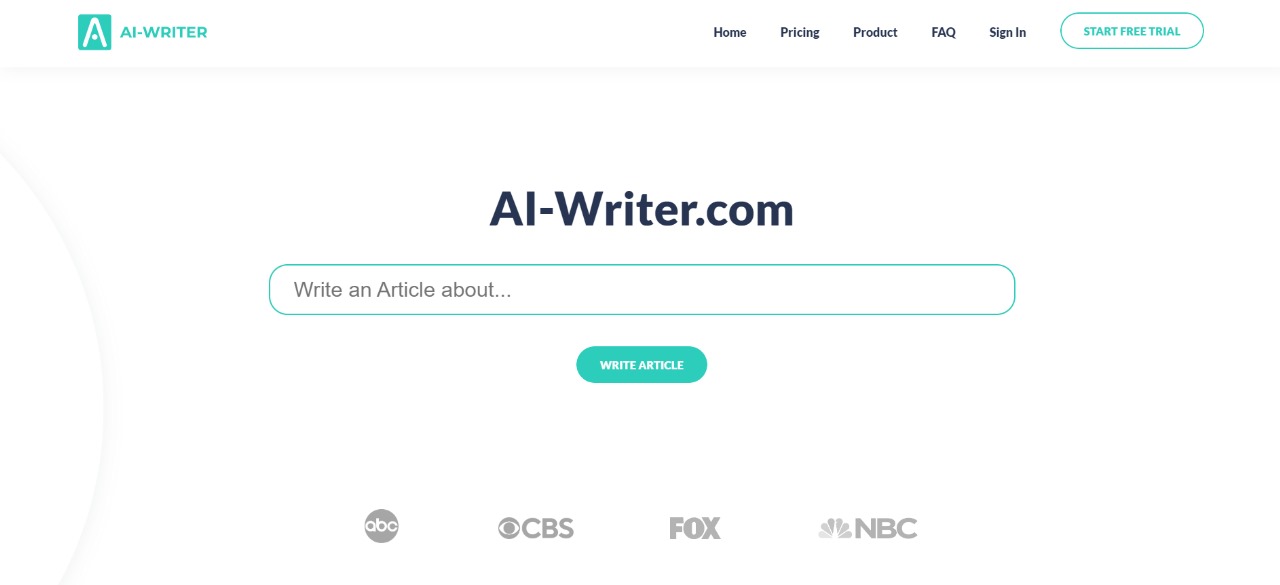
AI-Writer is an AI Writer tool designed to generate long-form content quickly while pulling in source-based research. Think of it as a draft engine that aims to replace the blank-page paralysis by delivering structured articles, suggested headlines, and citation-backed paragraphs. For anyone asking “what is AI-Writer” the short answer is: a writing assistant built to speed drafting and reduce fact-checking effort — when used correctly.
This article walks through the real-world problems AI-Writer solves and the gaps you still need to watch for: hallucinations without citations, mapping content to keywords, and producing SEO-ready structure. Read on to see where AI-Writer helps most, and where a human touch is still necessary.
Why “What is AI-Writer” matters right now: speed vs. trust
The main reason people search “what is AI-Writer” isn’t curiosity — it’s pressure. Teams, bloggers, and students need to write long-form articles fast and keep accuracy intact. The promise of an AI Writer with citations and a fact-checked AI article tool sounds ideal: imagine turning a topic into a 1,500-word draft in under an hour, complete with sources. That solves the slow article drafting problem — but only if citations are accurate and the AI doesn’t invent facts.
A common example: a content manager needs a product comparison post for SEO. They want AI-Writer to produce an SEO-ready article and avoid hallucinations that could mislead readers or get penalized by search engines. So the core trade-off becomes speed versus reliability. Does AI-Writer add citations that are verifiable? Can it map content to target keywords like a seasoned SEO writer? Those are the questions that determine whether the tool saves hours or creates more work.
Common Problems Teams Actually Face with AI-Writer
AI-Writer research and AI-Writer citations
Research and correct sourcing are the clearest friction points. Many users expect a fully fact-checked draft, but AI outputs can include shaky claims or outdated references. If you rely on the tool for citations, you must verify sources — otherwise you trade time saved in drafting for time lost in fact-checking. This is especially true for students and bloggers writing “AI-Writer review for students” or niche how-to guides.
AI-Writer templates and SEO-ready structure
Another problem is mapping content to keywords and structure. Templates help, but a generic template doesn’t guarantee SEO performance. You might get a coherent article that misses the intent behind queries like “AI-Writer for SEO content” or “how to create articles with AI-Writer.” That forces manual rework: reordering sections, adding keyword variations, and improving headlines.
AI-Writer accuracy vs. alternatives
Finally, accuracy and tool selection matter. People comparing AI-Writer vs Jasper or searching for AI-Writer alternatives for bloggers want to know where the truth lies. Pricing and template depth influence the decision, but so does fact-check reliability. A cheaper plan with fewer verification features can cost you credibility later.
Why These Problems Are Expensive and Frustrating
Time lost to rework is the obvious cost. If an AI draft cuts initial writing time by 50% but adds two hours of verification and restructuring, the net gain shrinks fast. For freelancers and agencies, that wasted time is direct lost revenue; for students and bloggers, it’s lower grades or fewer pageviews.
Beyond time, the real damage is credibility and ranking risk. Published errors, hallucinated facts, or poor keyword mapping can mean lost trust from readers and penalties from search engines. In short: a tool that speeds drafting but doesn’t secure accuracy and SEO structure might feel like a shortcut — until you pay to fix it. Keep scrolling to see practical fixes and how to use AI-Writer to avoid these traps.
AI-Writer: A Practical Fix for Slow Research and Hallucinations
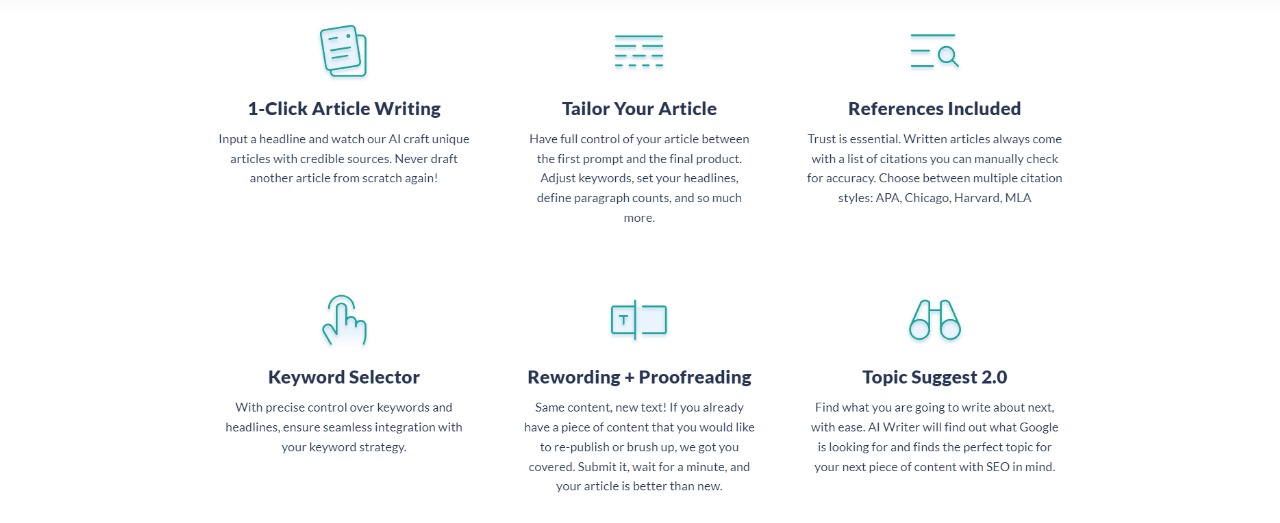
If your biggest content headaches are time-consuming research, hallucinations without citations, and clumsy SEO structure, AI-Writer is built to address those exact pain points. Instead of a generic rewrite engine, this AI Writer tool combines draft generation with a research-first workflow: it pulls suggested sources, creates article outlines tailored to search intent, and produces citation-backed paragraphs you can verify quickly.
That means teams and bloggers get a usable draft that’s already mapped toward SEO-friendly headings and keyword placement. The platform’s templates speed the blueprinting phase (so you’re not manually creating H2s and meta descriptions), and the integrated research view highlights original sources for every claim. For anyone asking “what is AI-Writer” with the intent to find a practical, time-saving writing assistant, this addresses the informational and commercial search intent — you learn whether the tool will produce publishable, SEO-ready content or simply a rough draft.
AI-Writer doesn’t remove the need for human fact checking, but it reduces tedious tasks. Instead of hunting for sources, you spend minutes verifying the cited links rather than hours doing the initial research. That trade-off is why many users choose AI-Writer over drafting from scratch or other tools that omit citations. For deeper comparisons and hands-on impressions, read this in-depth AI Tool review of AI-Writer to see pricing, accuracy tests, and user workflows. For a broader view of alternatives and complementary products, check this comprehensive directory of AI tools for writers.
How to Use AI-Writer Step by Step
- Choose the right plan and set up your workspace
Start by selecting the plan that matches your volume and citation needs. AI-Writer pricing tiers differ by article credits, research depth, and team seats, so map expected output (weekly articles, multi-author workflows) before committing. Create a project per topic cluster to keep templates, references, and revisions organized. - Prepare a focused brief
Don’t feed the AI vague prompts. Provide a specific title, primary keyword, target audience, word count, and three to five subtopics you want covered. For SEO-focused articles, include target keywords (primary and mid-tail) and the search intent you want to satisfy — informational, comparison, or transactional. Good briefs cut iteration time and improve AI-Writer accuracy. - Pick and customize a template
Select a template that matches your content type: listicle, long-form guide, comparison, or product review. Templates control the article skeleton (H1, H2s, intro, conclusion), so choose one that aligns with on-page SEO best practices. Use the template’s editable blocks to insert keyword variations and required CTAs. - Run the research draft
Use the research mode to generate a draft with embedded citations. AI-Writer will surface source links alongside paragraphs. Treat these as starting points: open each link to confirm relevance, date, and authority. This cuts research time by aggregating sources, but does not replace verification — think fast vetting, not blind publishing. For guidance on evaluating sources and search intent alignment, refer to Google’s Search Central guidelines. - Fact-check and prune hallucinations
Scan the draft for any claims that lack clear sourcing. Cross-check numbers, dates, and quotes against the linked sources. If a paragraph contains no reliable citation or seems speculative, remove or reword it. If you want a second opinion on model limits and expected behavior, review OpenAI model limitations documentation to understand common hallucination patterns. - Optimize for SEO and readability
Adjust headings to include keyword variations, break long paragraphs, and add internal links to related posts. Use the platform’s meta-description and keyword fields to set primary focus terms. Insert examples, data points, and short lists to improve dwell time and scannability. If you’re producing content for a blog, append author notes and citations in a consistent format to maintain credibility. - Export, publish, and iterate
Export the draft to your CMS or copy it into your editorial queue. Track which templates deliver the best organic results and refine briefs over time. Reuse successful templates for topic clusters to scale production while preserving SEO structure and quality.
Benefits and Expected ROI
Faster first drafts with higher research coverage
AI-Writer reduces the time from blank page to a structured draft by consolidating research and writing. Expect initial draft times to drop significantly—what used to take hours of source hunting can become a 30–60 minute draft-and-verify cycle. For small teams, that translates into more published pieces per month without proportionally higher staffing costs.
Lower verification overhead compared with zero-source AIs
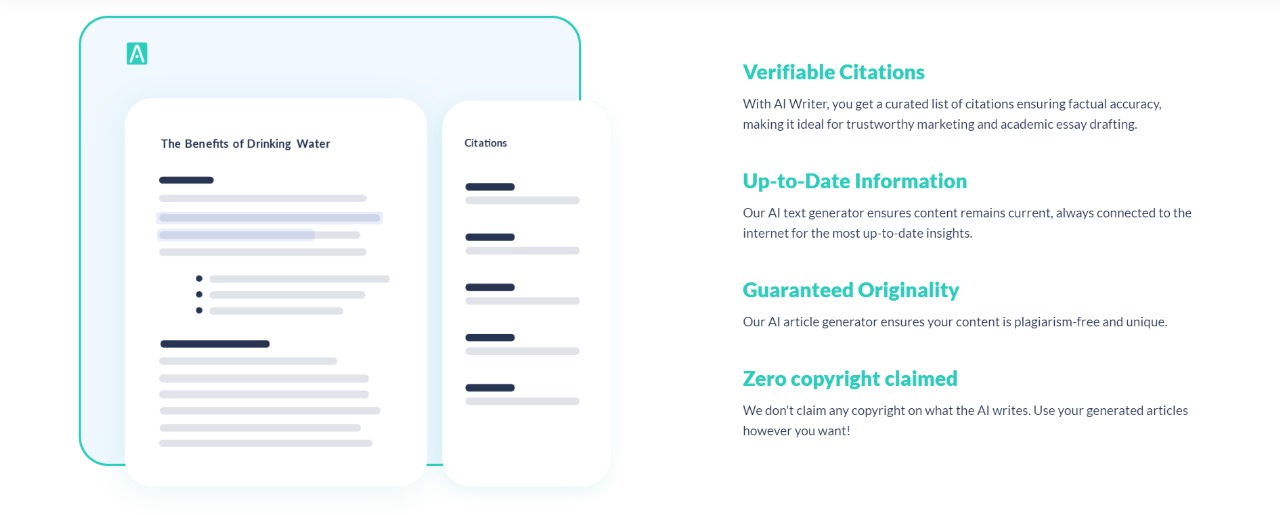
Because AI-Writer surfaces citations alongside generated text, verification becomes a targeted activity. Instead of fact-checking every sentence, editors focus on flagged or high-risk claims. That reduces the net time spent on fact checking and lowers the risk of publishing hallucinated content that harms credibility or rankings.
Improved SEO readiness and workflow consistency
Templates and keyword fields create repeatable structures that align with search intent. That means less time reordering sections or rewriting headings to match queries such as “AI-Writer for SEO content” or “how to create articles with AI-Writer.” Over time, consistent structure improves indexability and can raise organic traffic per article.
Predictable cost-per-article and scale
With clear pricing tiers, you can model cost-per-article based on expected revision time and editorial rates. Companies comparing AI-Writer vs Jasper or other alternatives find the ROI depends less on raw generation quality and more on how much the tool reduces manual research and structural fixes.
Better credibility when used with human oversight
AI-Writer is not a publish-and-forget solution. The real ROI comes from pairing the tool with a verification step and an editor who understands SEO. When used this way, the platform answers the practical question “what is AI-Writer” for teams who need a reliable drafting engine that respects citations and structure — and that combination is what turns speed into sustainable value.
Advanced Workflows and Editor Checklist
To get the most from AI-Writer, treat it as the research-and-draft engine in your content pipeline rather than the final publisher. Start each project with a short editor checklist: verify top-cited sources, confirm any stats or dates, check quotes for accurate attribution, and run a plagiarism scan if you adapt aggregated content. Use built-in templates to enforce headings and H2 keyword placement, then add a human touch—examples, local context, and original analysis—to make the article unique and defensible.
Use the research view strategically. When AI-Writer pulls suggested links, prioritize primary sources and authoritative publications. Open the most relevant references and capture a quick citation note (author, date, URL) in your CMS. This habit makes fact-checking faster and improves traceability when updating content later. For guidance on indexing and citation practices, consult Google’s Search Central documentation.
Template tuning and scaling
Templates are where teams save time. Start with a “base” template for each content type (how-to, comparison, listicle) and version them by intent—SEO-focused, conversion-focused, or academic-style. Add blocks for keywords (target + semantic variations), a facts section that lists checked claims, and an optional citations block for visible links. Track which template variants perform best by monitoring organic traffic, time-to-publish, and edit hours per article.
When scaling, use projects to group topic clusters and reuse top-performing templates. Assign an editor or fact-checker role in your workflow so each draft first passes a verification stage before SEO optimization. This reduces rework and preserves the value of AI-Writer’s research-first approach.
Balancing speed and accuracy
AI-Writer accelerates first drafts, but the key measure is accuracy. Build a quick fact-check routine: validate numbers, confirm dates, and ensure claims link to credible sources. If accuracy matters most (e.g., student research or technical content), add a secondary review by a subject-matter expert. For discussions about model limitations and hallucination patterns, see OpenAI’s documentation on model behavior.
If you’re weighing options like AI-Writer vs Jasper, consider downstream costs: how much time do editors spend verifying citations? AI-Writer reduces source-hunting, which can lower verification overhead compared with zero-source AIs—an important ROI factor to include in your content budget.
Practical use cases and audience fit
Bloggers: Use AI-Writer to generate SEO-ready drafts and focus your time on personalization and link building. Consider AI-Writer alternatives for bloggers if you need heavy creative rewriting rather than research-backed drafts.
Students: The research citations are helpful, but remember to cross-check sources and paraphrase ethically. See the AI-Writer review for students to learn how to adapt drafts responsibly.
Agencies and teams: Leverage multi-seat plans to standardize templates and routing rules. Track article velocity and average edit time to measure AI-Writer pricing against real productivity gains.
Monitoring performance and iterating
Set clear KPIs: time-to-first-draft, edit hours per article, and organic sessions per post. Use A/B tests on headlines and templates to find which structures lift click-through rates. Keep a short log of recurring citation gaps—if the tool repeatedly misses niche sources, incorporate preferred domain lists into briefs or supplement with manual research.
Conclusion
AI-Writer fills a practical niche: it’s an AI writing tool designed to reduce the most tedious parts of content creation—source discovery and first-draft structure—while still requiring human oversight for accuracy and originality. By combining templates, an integrated research view, and citation-backed paragraphs, it streamlines the path from idea to SEO-ready draft. Teams that adopt a verification-first workflow and refine templates around search intent will see the best ROI: faster publish cycles, lower verification overhead, and more consistent on-page SEO.
If you’re comparing tools, weigh AI-Writer pricing against editorial time saved and the value of citation-driven content for your audience. When accuracy is mission-critical, pair AI-Writer with a subject expert for final validation. Ultimately, the question “What is AI-Writer” is answered by how it changes your process: it’s a drafting engine that shifts effort from source-hunting to focused verification and optimization, helping you publish more reliably and faster.