
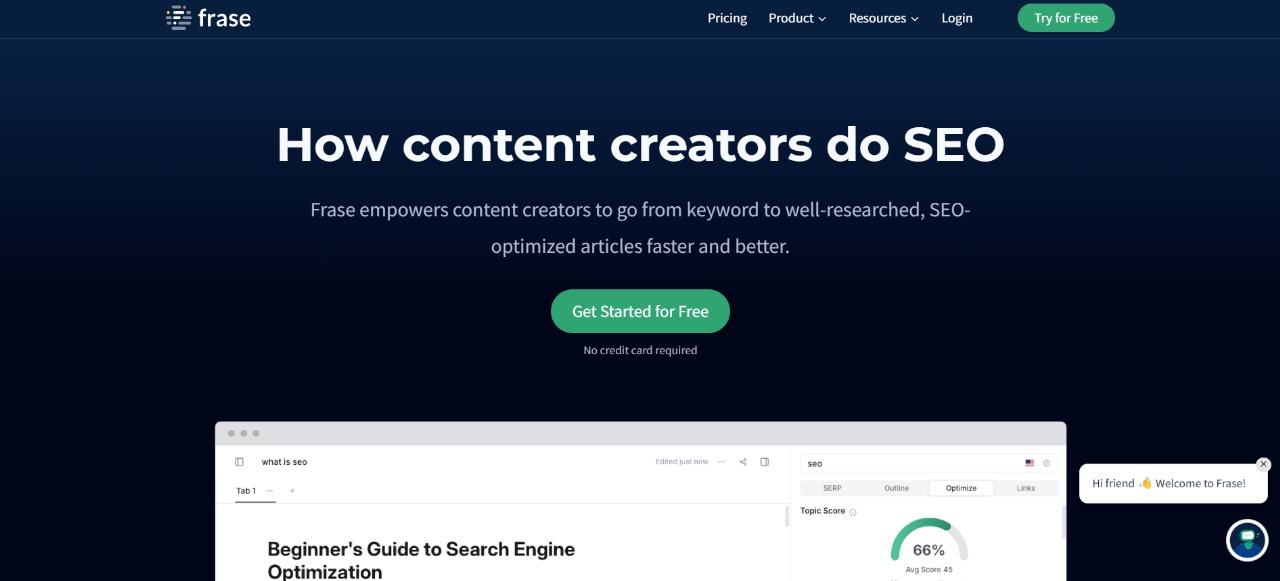
What is Frase.io — and why fragmented SERP research plus manual briefs are killing your SEO
Estimated reading time: 12 minutes
Key Takeaways:
- Frase.io centralizes and automates SERP research, saving valuable time.
- It addresses common SEO challenges like manual topic clustering and poor search-intent alignment.
- Frase’s integrated AI writer and content scoring system enhance content quality and optimization.
- Adopting Frase can lead to measurable improvements in draft throughput and organic traffic.
- Implementing Frase involves a strategic rollout with specific metrics to track success.
Table of Contents
What is Frase.io: An overview for fixing slow SERP research and manual content briefs
The real problem: slow, fragmented SERP research and weak Frase content brief outputs
Common problems: manual topic clustering, poor search-intent alignment, and no clear content score
Why these issues cost you clicks, rankings, and time
Frase.io: the practical fix for fragmented research and weak briefs
How to use Frase.io step‑by‑step
Expected ROI and key wins
Measurable outcomes and metrics to track
Frase pricing and value calculus
Rollout checklist: How to create SEO briefs with Frase and scale
Conclusion
Frequently asked questions
What is Frase.io: An overview for fixing slow SERP research and manual content briefs
Frase.io is an AI-powered content platform designed to turn scattered SERP data into clear, actionable SEO briefs. At its core, it automates SERP analysis, groups related topics, and generates outlines and starter drafts — the exact pieces teams waste hours assembling by hand.
This article explains how Frase addresses the biggest blockers in modern content workflows: slow, fragmented research; hard-to-build, data-driven briefs; misaligned search intent; and manual topic clustering. Read on to learn what Frase does, why it matters, and which parts of your content process it can realistically replace.
The real problem: slow, fragmented SERP research and weak Frase content brief outputs
Most teams treat SERP research as a scavenger hunt. Marketers pull top-ranking pages, copy headings into a doc, skim for keywords, then guess at intent. That fragmented process—spread across tabs, spreadsheets, and siloed notes—creates inconsistent briefs that disconnect writers from what users actually want. Frase SEO aims to solve that gap by centralizing SERP analysis, but the real win is how it turns raw SERP signals into a usable Frase content brief that prioritizes intent and coverage.
Imagine building a house with measurements scribbled on napkins. You might get something that stands up, but it won’t match the blueprint. Frase SERP analysis automates the measuring tape: it extracts headings, question themes, and keyword clusters from the SERP and maps coverage gaps. That makes the subsequent Frase outline builder tutorial unnecessary for basic structure work—writers get outlines and content scores that show what’s missing. If you’re wondering whether to compare Frase vs Surfer SEO or evaluate Frase pricing, understand that Frase’s value is in replacing tedious data wrangling with a repeatable, intent-focused brief. Keep reading — next we’ll break down the most common problems teams still face and how Frase specifically addresses them.
Common problems: manual topic clustering, poor search-intent alignment, and no clear content score
Problem one: topic clustering is manual
Teams export keyword lists from tools, then manually group terms by hand or guesswork. That slows topic research and causes overlapping pages that cannibalize each other. Frase’s keyword clustering reduces that friction by suggesting clusters based on SERP context and shared entities, so you can plan topical hubs rather than random posts.
Problem two: poor search-intent alignment
Writers often optimize for keywords without understanding whether the SERP favors listicles, product pages, or how-to guides. The result: well-optimized content that nobody clicks. Frase SERP analysis surfaces intent signals—featured snippets, question boxes, and common formats—so briefs tell writers which format to use and which subtopics to prioritize.
Problem three: no clear content score or coverage metric
Without a content score, teams argue about completeness and miss obvious gaps. Frase content score explained: it measures how many intent signals and topic clusters your draft covers compared to top-ranking pages. That gives a concrete target for Frase content optimization and reduces endless revision cycles. These three pain points are common across agencies and in-house teams; the next section explains why they’re so costly.
Why these issues cost you clicks, rankings, and time
When research is slow and fragmented, opportunity decays. Competitors who move fast capture featured snippets and link equity while your draft sits in a queue. That’s lost traffic you rarely reclaim.
When briefs lack intent alignment or a clear content score, writers produce content that gets on page one but underperforms. You pay for impressions that don’t convert, and you waste editorial hours on rewrites. Keep scrolling — the next part will show how Frase’s features (outlines, AI writer, and topic research) plug these gaps and where it still needs human oversight.
Frase.io: the practical fix for fragmented research and weak briefs
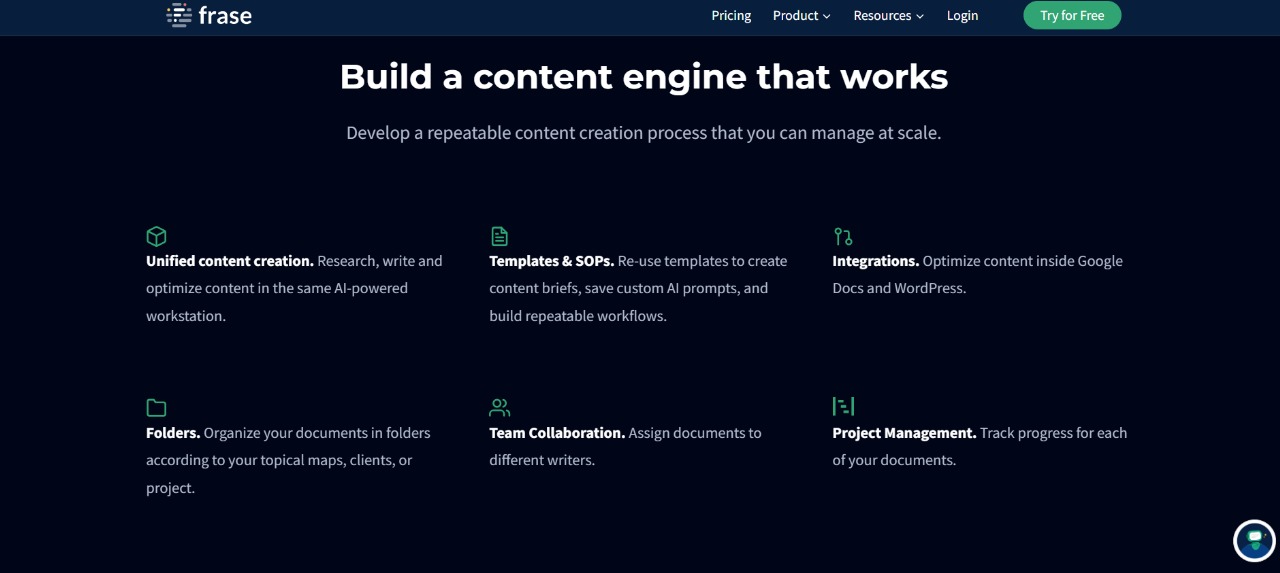
If your team spends hours stitching SERP notes into a brief, Frase acts as the practical fix that replaces busywork with data-driven output. Instead of toggling between tabs and spreadsheets, Frase centralizes SERP signals, extracts headings and questions, clusters related keywords, and produces a draft-ready outline. That single workflow tackles the core pain points: slow SERP research, manual topic clustering, and unclear content coverage.
Frase’s SERP analysis engine pulls the top-ranking pages and standardizes the key elements—titles, H2/H3s, featured snippet triggers, and FAQs—so writers get a Frase content brief that tells them what to cover and in which format. The platform also scores drafts against competitor coverage, giving a measurable Frase content score that turns subjective “is this complete?” debates into concrete optimization tasks.
For teams comparing options, Frase combines outline building, topic research, and an AI writing assistant into one place—no need to bounce between separate tools for clustering or brief creation. If you’re evaluating Frase pricing or sizing up Frase vs Surfer SEO, think about how much time your team spends on research vs. writing: Frase shifts the balance toward execution by automating the heavy lifting. If you want deeper hands-on analysis, read our comprehensive Frase.io AI tool review and pricing breakdown for real-world examples.
How to use Frase.io step‑by‑step
- Start with the topic and intent. Enter a seed keyword or URL and choose the intent you’re targeting—informational, commercial, or navigational. This matters because Frase SERP analysis looks for format signals (how‑to, listicle, product page) and uses them to recommend the best page structure. Answering the likely Google Search Intent up front ensures the brief aligns with what searchers actually expect.
- Run SERP analysis and collect signals. Frase crawls the top results and extracts headings, highlighted snippets, question boxes, and common phrases. The tool surfaces recurring entities and questions across pages, so you quickly see the patterns that deserve attention. This is the foundation of automated Frase content brief creation: instead of manually copying headings, you get a consolidated list of subtopics and user questions.
- Generate keyword clusters and topic groups. Frase groups related keywords and phrases into clusters based on shared SERP contexts. That keyword clustering prevents cannibalization and helps you plan pillar pages and supporting articles. Use these clusters to set internal linking targets and to decide which subtopics need standalone pages versus sections within a single post.
- Build the outline. Use the Frase outline builder tutorial (the interface walks you through it) to convert clustered topics into a hierarchical outline. Frase suggests H2s and H3s based on the most common headings it found, and you can drag, merge, or split sections. This gives writers a clear, research-backed structure—no more guesswork about what belongs where.
- Draft with the AI writer. With an outline in place, open the Frase AI writer to generate paragraphs, summaries, or section drafts. The writer references the brief and the most relevant SERP content so drafts stay aligned with intent and topical coverage. Always review and edit for voice, accuracy, and original examples—AI drafts accelerate writing but don’t replace editorial judgment.
- Optimize and measure. After drafting, Frase scores the content against the top-ranking pages and highlights coverage gaps. Use that Frase content score explained in the brief to prioritize edits: add missing subtopics, answer unanswered user questions, or expand sections where competitors provide more depth. This closes the loop on Frase content optimization and reduces revision cycles.
- Iterate and scale. Export briefs for your editorial calendar or replicate workflows across multiple keywords. For teams deciding between Frase vs Surfer vs Scalenut comparison scenarios, Frase’s all-in-one approach reduces tool switching and centralizes research, outlines, and AI drafting in one workspace. If you want a direct product look, check Frase.io official site and pricing, or compare feature lists on Surfer SEO for specific capabilities.
Expected ROI and key wins
Adopting Frase shifts hours of fragmented research into minutes. Instead of several team members assembling SERP snippets manually, a single editor can run analysis, create a data-backed Frase content brief, and hand a writer a near-complete outline. That saves editorial time and reduces back-and-forth revisions, accelerating time-to-publish and freeing resources for promotion and link building.
You’ll see fewer content overlaps because Frase’s keyword clustering reduces topic cannibalization. Pages that target clearly defined clusters tend to rank more consistently and capture more long-tail traffic. Measurable gains also come from aligning format to intent: when a brief specifies “listicle” vs “how-to” or “product comparison,” writers target the SERP format that converts, improving click-through rates and engagement.
Using the Frase AI writer for blog posts shortens draft time—especially for research-heavy sections like FAQs or background summaries—while the Frase outlines feature ensures consistency across authors. Teams that track content velocity often report a 2x or greater improvement in draft throughput, which translates to more experiments, quicker topic coverage, and faster ranking wins.
If your search intent is to understand what Frase does and whether it fits into an enterprise or agency workflow, this setup answers that: Frase centralizes SERP research, automates brief creation, and provides measurable content scores to guide optimization. For an impartial comparison and broader options, explore our complete directory of AI tools and reviews for content teams, which includes related platforms and integrations.
What is Frase.io? It’s the tool that turns slow, fragmented SERP research into repeatable, intent-focused briefs—cutting the grunt work so your team can write and optimize with confidence.
Measurable outcomes and metrics to track
When you roll Frase into your process, track a handful of concrete KPIs to prove value. Start with time-to-brief: measure average minutes spent assembling a SERP research brief before and after Frase SERP analysis. Track draft throughput (drafts completed per writer per week), Frase content score improvements, organic traffic for pages optimized with Frase, and SERP position changes for targeted keywords. Teams typically report a clear reduction in pre-writing research time and faster editorial cycles; document percentage improvements so you can justify Frase pricing versus internal labor costs.
Also monitor quality metrics: bounce rate, average session duration, and CTR for pages that follow Frase outlines and Frase content optimization recommendations. Combine these engagement signals with keyword ranking trends to see whether Frase’s topic research and keyword clustering are reducing cannibalization and lifting long-tail visibility.
Frase pricing and value calculus
Frase pricing is tiered to suit solopreneurs, agencies, and enterprise teams, and it’s worth weighing subscription cost against the time you’ll save on SERP research and brief creation. For small teams, the efficiency gains in writing velocity often offset the monthly fee within a few weeks; agencies benefit from reproducible briefs that speed client delivery. For detailed plan breakdowns and real-world cost examples, see our Frase review and pricing breakdown.
If you’re comparing Frase vs Surfer SEO or considering a broader Frase vs Surfer vs Scalenut comparison, factor in tool consolidation: Frase bundles SERP analysis, topic research, outlines, and an AI writer in one workspace, which can reduce the need for multiple subscriptions. For feature comparisons, check Surfer SEO’s published features to compare specifics and integrations.
Rollout checklist: How to create SEO briefs with Frase and scale
- Pilot a small set of topics. Pick 5–10 high-priority keywords and run full Frase SERP analysis. Produce Frase content briefs and assign one writer per brief to measure time savings and quality differences.
- Create a template library. Save standard Frase outlines for formats you use often (how-to, product comparisons, listicles). Use the Frase outline builder tutorial to teach writers how to adapt suggested H2/H3s and merge sections.
- Train editors on the Frase content score explained. Teach editors to read Frase’s coverage gaps and prioritize fixes—this turns subjective editing into objective tasks.
- Integrate with your CMS. Export outlines or copy structured briefs into your publishing workflow. If you use a collaboration tool, standardize how briefs are shared and how AI drafts are flagged for review.
- Establish tagging and clustering rules. Use Frase keyword clustering outputs to map pillar pages and supporting content. Maintain a central keyword map to avoid overlap.
- Measure and iterate. After publishing, track the metrics listed above and refine templates. Scale the pilot gradually; once you hit predictable wins, expand across more topics.
For teams that need a refresher, our Frase review and the CharlieAITools AI tools directory include practical examples and setup tips to accelerate adoption.
Conclusion
Frase reduces the friction of research and makes brief creation repeatable, measurable, and aligned with search intent. By centralizing SERP signals, automating keyword clustering, and offering an integrated AI writer, Frase helps teams convert scattered insights into structured, publishable content faster. The real ROI comes from shifting time from research to writing and optimization—faster drafts, fewer revision loops, and clearer editorial decisions informed by a Frase content brief and content score.
If you care about scaling content without inflating headcount, Frase’s combination of SERP analysis, outline tooling, and content scoring gives you a defensible workflow. Pair that with consistent measurement and an SOP-driven rollout, and you’ll find the investment in Frase pricing often pays for itself in months, not years. Ask yourself whether your current process wastes hours on fragmented research; if it does, Frase provides a pragmatic path forward. What is Frase.io? It’s the tool that makes research-driven briefs repeatable and actionable.