What Is Hyper3D Rodin and How Does It Help with 3D asset generation?
Have you ever wondered what is Hyper3D Rodin and how it could transform your creative projects? In today’s fast-paced digital world, the demand for high-quality 3D content is exploding, from immersive games and animated films to detailed product visualizations and virtual reality experiences. Yet, the traditional process of creating these assets can be incredibly complex, time-consuming, and often requires specialized skills that not everyone possesses. This is where an understanding of innovative AI solutions becomes crucial.
Hyper3D Rodin emerges as a powerful answer to these challenges, offering a fresh approach to 3D asset generation. This platform is designed to democratize 3D content creation, making it more accessible and efficient for a wide range of users. By leveraging advanced artificial intelligence, it aims to simplify what was once a daunting task, allowing creators to bring their visions to life with unprecedented speed and ease. Understanding its core capabilities is key to unlocking new creative possibilities. Once you understand What Is Hyper3D Rodin, check our detailed Hyper3D Rodin Review to compare features, pricing, pros, cons, and alternatives.
The Core Challenge: Manual 3D Modeling is a Time and Skill Sink
At the heart of many creative and technical projects lies a significant hurdle: the intricate and often arduous process of manual 3D modeling. Crafting detailed 3D assets from scratch typically demands extensive training, years of practice, and a deep understanding of complex software. Artists and designers must master intricate tools, from polygon modeling and sculpting to texturing and rigging, each requiring specialized knowledge and countless hours to perfect. This steep learning curve acts as a major barrier for many aspiring creators.
Beyond the skill requirement, the sheer time investment for manual 3D model creation is immense. Even for experienced professionals, generating a single high-quality asset can take days or even weeks, depending on its complexity. This lengthy production cycle directly impacts project timelines and budgets, making it difficult for teams, especially smaller studios or independent developers, to keep pace with ambitious goals. The traditional workflow often feels like a bottleneck, slowing down innovation and increasing costs.
Additional Hurdles: Quality, Cost, and Creative Bottlenecks
The challenges don’t stop at time and skill. Achieving consistent, production-ready quality in 3D models presents another significant hurdle. It’s not enough to simply create a model; it must have clean topology, optimized polygon counts, accurate UV mapping, and high-resolution textures to perform well in games, animations, or simulations. Ensuring these technical specifications are met while maintaining artistic integrity requires meticulous attention and often several rounds of refinement, further extending timelines.
Furthermore, the financial implications of traditional 3D asset creation can be staggering. Hiring skilled 3D artists commands premium salaries, and licensing high-quality pre-made assets can quickly deplete a project’s budget. For indie game developers or small design agencies, these costs can be prohibitive, forcing compromises on creative vision or leading to reliance on generic assets that fail to make a project stand out. The search for affordable, unique content often feels like an uphill battle.
These limitations also create significant creative bottlenecks. When faced with tight deadlines, limited budgets, and complex technical requirements, the freedom to experiment and iterate quickly is often sacrificed. Artists and designers may find themselves constrained, unable to explore multiple design variations or rapidly prototype new ideas. This stifles innovation and can lead to less dynamic or less original content, impacting the overall appeal and success of a project in a competitive market.
Why These Problems Are Costly, Frustrating, and Limiting
These pervasive problems in 3D asset creation translate directly into significant costs, profound frustrations, and severe limitations for creators across industries. The most immediate impact is on project timelines and budgets. Manual modeling’s time-intensive nature means longer development cycles, which can delay product launches, miss market opportunities, or incur higher operational expenses. For businesses, this can mean lost revenue and a diminished competitive edge.
From a creative standpoint, these challenges lead to immense frustration and creative blocks. Imagine having a brilliant idea for a unique character or an intricate environment, only to be held back by the inability to quickly bring it into 3D due to skill gaps or resource constraints. This can force creators to compromise their vision, settle for less detailed or generic assets, or abandon innovative concepts altogether. The joy of creation can quickly turn into a struggle against technical barriers.
Ultimately, these issues limit accessibility and innovation within the 3D space. The high barrier to entry prevents many talented individuals from exploring 3D content creation, while established professionals struggle with inefficient workflows that hinder rapid iteration and experimentation. This slows down the overall pace of progress and makes it harder for new, groundbreaking ideas to emerge. The need for a more streamlined, accessible solution for 3D asset generation has never been more critical.
Hyper3D Rodin: Your AI-Powered Bridge to Effortless 3D Creation
In light of the significant hurdles faced by creators, from the steep learning curve of manual modeling to the ever-present pressures of time and budget, the question “what is this AI tool that can actually help?” becomes increasingly urgent. This is precisely where Hyper3D Rodin steps in as a transformative solution. It’s not just another piece of software; it’s an intelligent platform designed to dismantle the traditional barriers to 3D content creation, empowering everyone from seasoned professionals to enthusiastic beginners to realize their creative visions with unprecedented ease and speed.
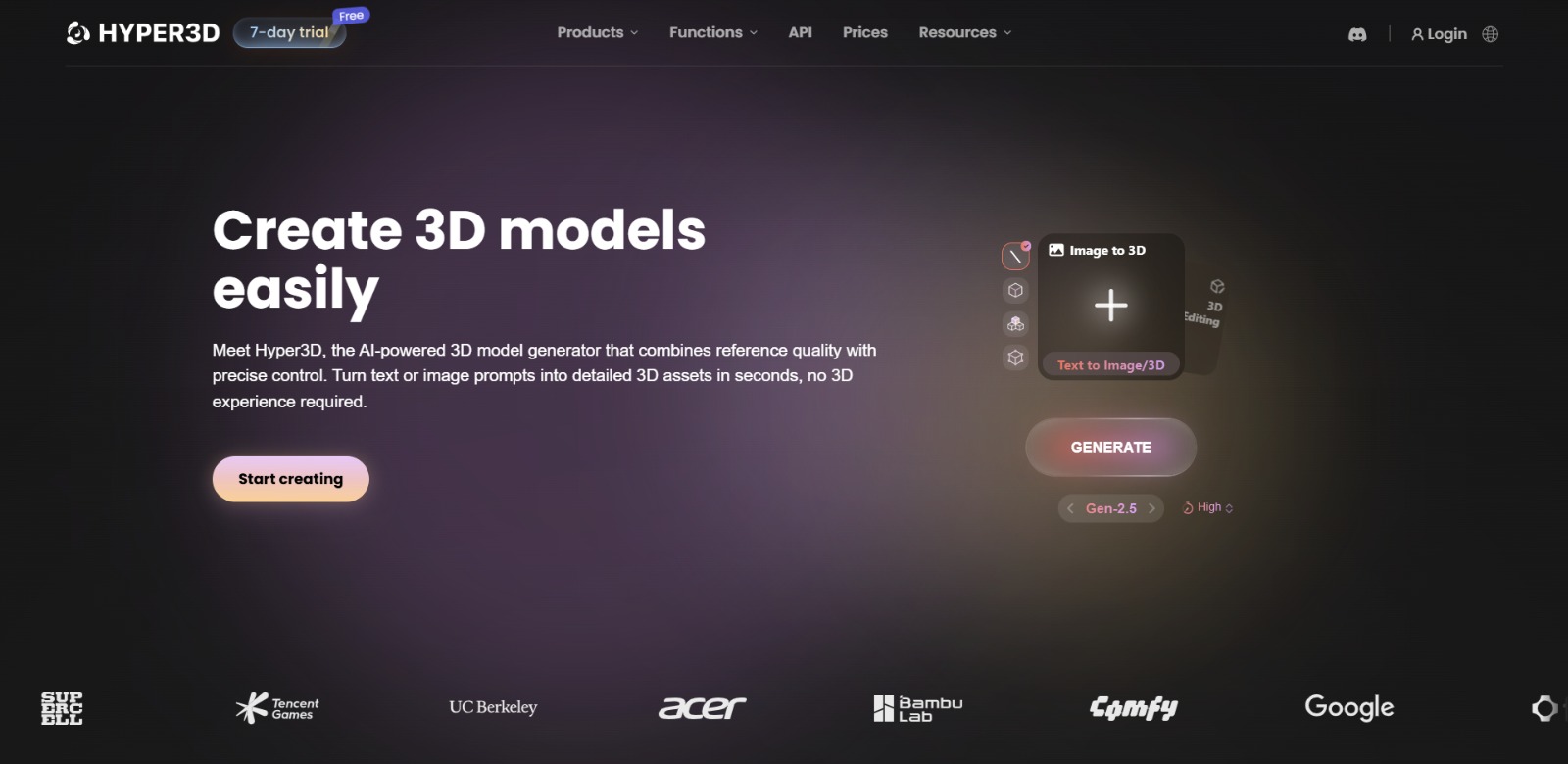
Hyper3D Rodin leverages the power of advanced artificial intelligence to streamline the entire 3D asset generation process. By automating many of the complex, repetitive, and skill-intensive tasks, it frees up creators to focus on the artistic and conceptual aspects of their work. Imagine turning a simple idea or a 2D sketch into a fully realized 3D model in a fraction of the time it would traditionally take. This platform is built to democratize 3D design, making high-quality assets accessible without requiring years of specialized training or a massive budget, directly addressing the core pain points we’ve explored.
How Hyper3D Rodin Simplifies Your 3D Creation Workflow
Understanding how Hyper3D Rodin operates reveals its true potential for simplifying what was once a daunting process. At its core, this AI solution transforms various inputs into ready-to-use 3D assets through an intuitive, guided workflow. It’s designed to be user-friendly, allowing creators to focus on their artistic intent rather than getting bogged down in technical complexities. Here’s a general overview of how users can typically interact with the platform to generate their 3D models:
1. Providing Your Creative Input
The journey with Hyper3D Rodin often begins with your creative spark. Users can initiate the 3D generation process by providing various forms of input. This might include a simple text description, where you articulate your desired object or scene in natural language. For instance, you could describe “a rustic wooden chair with intricate carvings” or “a futuristic spaceship with sleek lines.” Alternatively, you might upload 2D images, such as concept art, photographs, or sketches, which the AI then uses as a visual reference to understand the form, texture, and style you’re aiming for. This flexibility means you can start from almost any creative starting point.
2. AI-Powered 3D Generation
Once your input is provided, Hyper3D Rodin’s intelligent algorithms get to work. The AI interprets your text prompts or analyzes your visual references to construct an initial 3D mesh. This is where the magic happens, as the system rapidly translates abstract ideas or flat images into a three-dimensional form. Beyond just the shape, the AI can also apply preliminary textures and materials, giving the model a realistic appearance based on your input. This initial generation phase significantly cuts down on the time and effort traditionally spent on foundational modeling, offering a solid base for further refinement.
3. Refining and Customizing Your Asset
After the initial generation, the platform typically offers a suite of intuitive tools for refinement and customization. This is your chance to truly make the asset your own. You might adjust the model’s geometry, tweak its proportions, or modify specific details to perfectly match your vision. Users can often experiment with different material properties, alter color palettes, or fine-tune texture maps to achieve the desired aesthetic. Some platforms also allow for basic rigging or posing adjustments, preparing the model for animation or specific scene compositions. This iterative process ensures that the AI-generated asset aligns perfectly with your project requirements, providing a blend of automation and creative control.
4. Exporting for Your Projects
The final step is to export your polished 3D asset. Hyper3D Rodin typically supports a range of standard 3D file formats, making it easy to integrate your creations into various software environments, such as game engines, animation suites, or CAD programs. This seamless export capability ensures that the assets generated are production-ready and compatible with your existing workflows. The entire process, from idea to export, is designed to be efficient and accessible, allowing creators to rapidly populate their projects with unique, high-quality 3D content. To learn more about how this tool compares to others, you might want to check out a detailed Hyper3D Rodin review.
Unlocking Creative Potential: The Core Benefits of Hyper3D Rodin
The introduction of Hyper3D Rodin into the creative workflow brings a cascade of powerful benefits that directly address the frustrations and limitations of traditional 3D asset creation. Perhaps the most significant advantage is the dramatic reduction in time and effort. By automating complex modeling tasks, creators can generate high-quality assets in minutes or hours, rather than days or weeks. This acceleration of the production pipeline means faster project completion, quicker iterations, and the ability to meet ambitious deadlines without compromising on quality, ultimately boosting overall productivity and efficiency.
Beyond speed, Hyper3D Rodin democratizes 3D content creation, making it accessible to a much broader audience. The high skill barrier that once prevented many from diving into 3D design is significantly lowered, empowering artists, designers, and developers who may not have extensive 3D modeling experience. This fosters greater creative freedom, allowing users to experiment with more ideas, prototype concepts rapidly, and bring unique visions to life without the prohibitive costs associated with hiring specialized talent or purchasing expensive pre-made assets. It truly empowers more people to engage with innovative AI tools for creative endeavors.
Embracing the Future of 3D Creation with Hyper3D Rodin
As we’ve explored, the journey of 3D content creation has historically been paved with significant challenges, from the steep slopes of learning complex software to the tight corners of budget and time constraints. Hyper3D Rodin emerges not just as a tool, but as a thoughtful companion on this journey, designed to smooth out those rough patches. It represents a significant leap forward in democratizing 3D design, making high-quality asset generation accessible to a much wider audience than ever before.
This AI solution stands out by automating the intricate, often tedious aspects of 3D modeling, allowing creators to reclaim their most valuable assets: time and creative energy. Whether you’re a seasoned professional looking to accelerate your workflow or an enthusiastic beginner eager to dive into 3D without years of specialized training, Hyper3D Rodin offers a compelling proposition. Understanding what this AI tool brings to the table means recognizing its potential to transform your creative process, enabling you to focus on innovation and artistic expression rather than technical hurdles.
Transform Your Creative Workflow and Bring Visions to Life
Imagine a world where your most ambitious 3D ideas leap from your mind to a fully realized model in a fraction of the time, without the usual headaches of complex software or endless tutorials. Hyper3D Rodin offers that very promise – a pathway to unlock unprecedented creative freedom and efficiency. It’s about moving beyond the limitations of traditional methods and embracing a smarter, more intuitive way to design. If you’re ready to accelerate your projects, experiment with more ideas, and truly see your visions take shape with ease, this AI solution is designed to empower you.
Ready to experience the future of 3D creation? Discover how Hyper3D Rodin can revolutionize your workflow and bring your creative projects to life faster than ever before.
Visit the tool and start building your next masterpiece today!
Hyper3D Rodin FAQs
What is Hyper3D Rodin primarily used for?
What is Hyper3D Rodin primarily used for?
Who can benefit most from using Hyper3D Rodin?
Who can benefit most from using Hyper3D Rodin?
How does Hyper3D Rodin generally create 3D models?
How does Hyper3D Rodin generally create 3D models?
Is Hyper3D Rodin suitable for beginners in 3D design?
Is Hyper3D Rodin suitable for beginners in 3D design?
CharlieAITools was created with love to help you discover the best AI tools and transform your life, your ideas, and your projects. We aim to share valuable resources with fellow entrepreneurs. Thanks a ton for your support!