Key Takeaways:
- ZeroGPT AI aims to be a user-friendly AI content detector, but its AI detection accuracy is debated.
- False positives are a major concern, causing anxiety for writers and educators.
- The free version has limitations like unclear character limits and intrusive ads.
- ZeroGPT AI is best used as an initial screening tool, not a definitive source of truth.
- Understanding its strengths and weaknesses is crucial for responsible use.
What is ZeroGPT AI and Why Does AI Detection Accuracy Matter?
In the rapidly evolving landscape of content creation, the rise of AI-generated text has sparked a parallel demand for tools that can reliably identify it. ZeroGPT AI has emerged as a prominent player in this space, positioning itself as a user-friendly AI content detector designed to help users discern between human-written and AI-generated text. The tool offers a quick and easy way to analyze text, providing a percentage score and highlighting specific sentences that may be AI-generated.
But with so many AI content detector options available, and with the stakes so high – think academic integrity, content authenticity, and SEO penalties – it’s crucial to understand ZeroGPT AI’s strengths and weaknesses. Is it a reliable solution, or does it fall short? This in-depth review will explore ZeroGPT AI’s features, ZeroGPT AI pricing, AI detection accuracy (claims vs. third-party tests), and address some of the common concerns and pain points users experience.
The Anxiety of AI Detection: Are False Positives Destroying Trust in Content?
The biggest fear surrounding AI detection isn’t necessarily missing AI-generated content; it’s the dreaded false positive. Imagine submitting an essay you painstakingly wrote yourself, only to have an AI detector flag it as potentially AI-generated. This scenario, unfortunately, is a reality for many students, writers, and professionals. The anxiety stems from the “guilty until proven innocent” culture that’s developing around AI content, placing the burden of proof on the content creator.
This fear is amplified by the inconsistencies and perceived inaccuracies of many AI detectors. A seemingly arbitrary percentage score can trigger a cascade of self-doubt and unnecessary revisions. Users find themselves second-guessing their own writing style, attempting to “de-AI” their work to appease the algorithm, even when the content is entirely original. The potential consequences of a false accusation – a failing grade, a lost client, damage to one’s reputation – are significant, fueling the demand for a truly reliable and accurate AI detection solution.
ZeroGPT AI and the Accuracy Debate: Claims vs. Reality & the Risk of False Judgements
ZeroGPT AI boasts high AI detection accuracy claims, but how do these claims hold up under scrutiny? While the tool might perform well on certain types of AI-generated text, independent tests reveal that its accuracy can vary significantly. The risk of both false positives (incorrectly flagging human-written text as AI) and false negatives (failing to identify AI-generated content) remains a major concern. These inaccuracies can lead to serious consequences.
For educators, relying solely on ZeroGPT AI for plagiarism checks could result in unfairly accusing students of academic dishonesty. For content creators, a false positive could lead to unnecessary revisions and delays in delivering work to clients. The lack of consistent reliability undermines trust in the tool and raises questions about its overall effectiveness.
The “trust-but-verify” approach becomes essential, often requiring users to cross-reference ZeroGPT AI’s results with other detectors, adding extra steps and complexity to their workflow. The tool’s efficacy is further impacted by its inability to distinguish between AI-assisted writing and fully AI-generated content.
A writer might use AI for brainstorming or editing, but the final product is still heavily influenced by their own voice and style. ZeroGPT AI may struggle to differentiate between these nuanced cases, leading to inaccurate assessments.
Hidden Costs & Frustrations: Unclear Limits, Intrusive Ads, and Brand Confusion
While ZeroGPT AI offers a free version, the ZeroGPT AI free limit can feel restrictive. The specific character limit per check isn’t always clear across their different domains, leading to confusion and frustration. Users often encounter unexpected cut-offs mid-analysis, disrupting their workflow. This prompts consideration of the paid plans, but the plan details themselves aren’t always presented in a straightforward manner, making it difficult to compare the features and pricing of ZeroGPT AI Pro vs Max plan features.
Furthermore, the free version is heavily laden with ads, which significantly detract from the user experience. These ads can be intrusive and distracting, particularly when dealing with lengthy documents. The multiple domains associated with ZeroGPT AI (.com, .net, .cc) contribute to brand confusion and create trust issues, especially when compounded by the similarity in name to GPTZero.
Users may find themselves questioning the legitimacy and reliability of the tool, leading to hesitation and ultimately, a search for alternative solutions. This fragmented online presence, coupled with aggressive advertising on the free tier, can create a perception of a less-than-professional operation, ultimately impacting its credibility.
ZeroGPT AI: Your First Line of Defense Against AI Content Uncertainty
Despite its limitations, ZeroGPT AI can serve as a valuable tool in specific contexts. It’s best viewed not as an infallible arbiter of truth, but as an initial screening mechanism, a starting point for further investigation. Think of it as a smoke detector for AI content – it might occasionally trigger a false alarm, but it can also alert you to potential problems early on. The key is understanding its strengths and weaknesses and using it judiciously as part of a broader content verification process.
For students, ZeroGPT AI can be a helpful way to pre-screen their work and identify sentences that might inadvertently resemble AI-generated text. For content creators, it can serve as a quick check to ensure their writing doesn’t trigger red flags with clients who use AI detection tools. And for educators, it can provide a starting point for investigating potential cases of AI-assisted plagiarism.
By managing expectations and understanding its limitations, ZeroGPT AI can be a useful addition to your anti-AI toolkit. However, always cross-reference its findings with other tools and, more importantly, with your own critical judgment.
Decoding ZeroGPT AI: A Step-by-Step Guide to AI Content Detection
So, how does this AI content detector actually work? While the underlying algorithms are complex, using ZeroGPT AI is surprisingly straightforward. The tool’s simplicity is one of its major selling points, making it accessible to users of all technical skill levels. Here’s a step-by-step guide to using ZeroGPT AI effectively. Understanding these steps is crucial to getting the most out of the tool and mitigating the risk of misinterpreting its results.
Before diving in, it’s important to remember that ZeroGPT AI, like other AI detectors, operates by analyzing patterns in text. It looks for telltale signs of AI-generated content, such as repetitive phrasing, formulaic sentence structures, and a lack of originality. However, human writing can sometimes exhibit similar patterns, leading to false positives. Keep this in mind as you interpret the results.
1. Copy and Paste Your Text
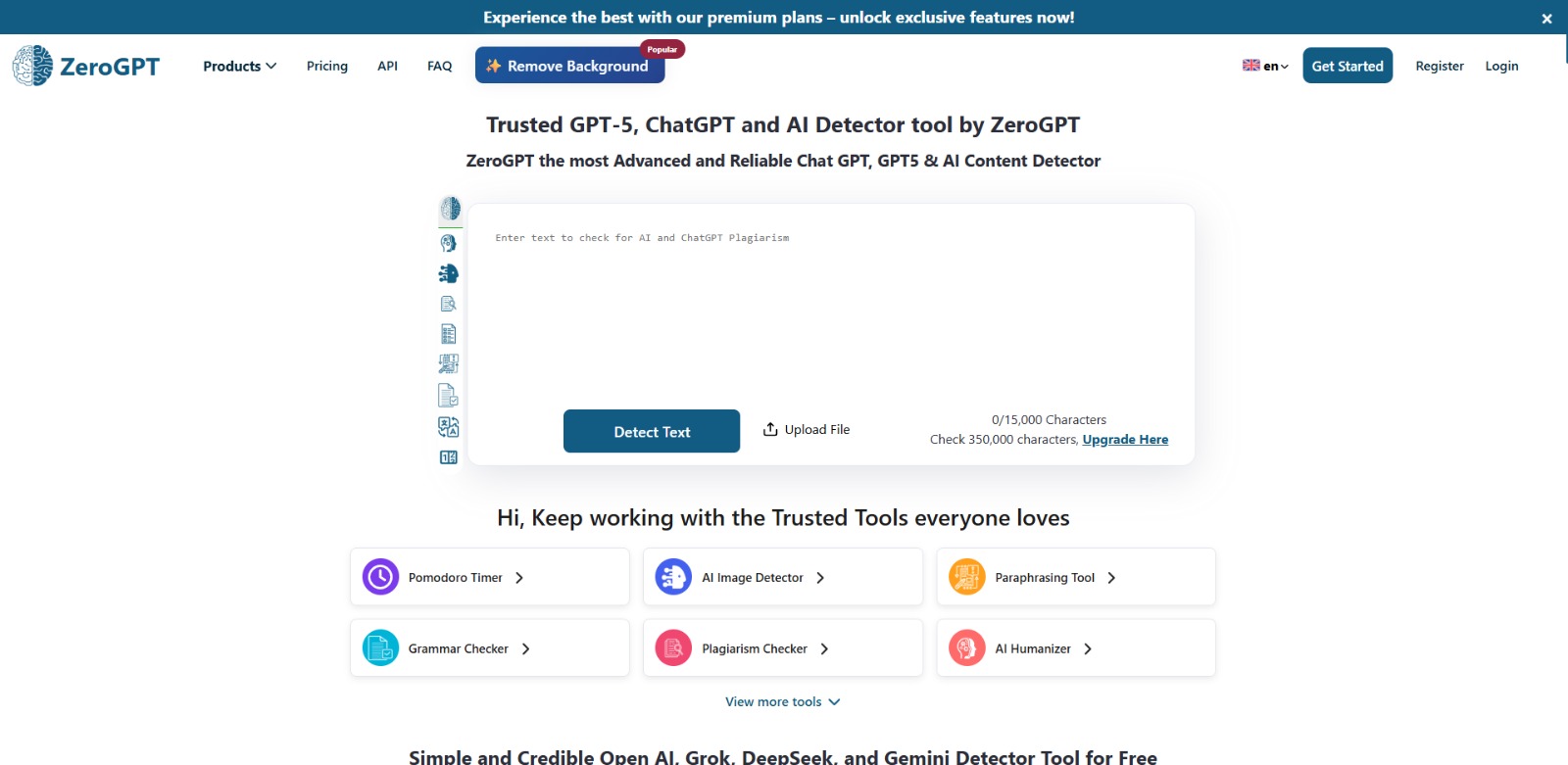
The first step is simple: copy the text you want to analyze and paste it into the designated text box on the ZeroGPT AI website. The interface is clean and uncluttered, making it easy to find the input area. Be mindful of the ZeroGPT AI character limit, especially if you’re using the free version. If your document exceeds the limit, you’ll need to break it up into smaller chunks. Once your text is in the box, you’re ready to proceed.
2. Initiate the Analysis
Once you’ve pasted your text, click the “Detect AI Text” button. ZeroGPT AI will then analyze the text and generate a report. The analysis typically takes just a few seconds, depending on the length of the text and the server load. During this time, avoid refreshing the page or navigating away, as this could interrupt the process. The speed and ease of this step are significant advantages of using ZeroGPT AI compared to more cumbersome alternatives.
3. Interpret the Results
After the analysis is complete, ZeroGPT AI will display a percentage score indicating the likelihood that the text is AI-generated. It will also highlight specific sentences that it identifies as potentially AI-generated. This highlighting feature is particularly useful, as it provides more granular feedback than just a simple percentage.
However, it’s crucial to interpret these results with caution. A high percentage score doesn’t necessarily mean the text is entirely AI-generated, and highlighted sentences aren’t automatically proof of AI involvement. Use this information as a starting point for further investigation, not as definitive proof.
4. Review Highlighted Sections Carefully
Pay close attention to the sentences that ZeroGPT AI has highlighted. Ask yourself why these sentences might have been flagged. Do they contain repetitive phrasing? Are they overly generic or formulaic? Do they lack a distinctive voice or style? If you wrote the text yourself, consider whether you might have unconsciously adopted AI-like patterns in your writing.
If you didn’t write the text, research the highlighted sections to see if they appear elsewhere online. This process of careful review is essential to avoid false positives and make informed judgments about the text’s authenticity. Consider this step as your way to improving the AI detection accuracy.
5. Consider Using Multiple Detectors and Tools
As emphasized earlier, no AI detector is perfect. It’s always a good idea to cross-reference ZeroGPT AI’s results with other detectors and tools. Several alternative AI detection solutions are available, each with its own strengths and weaknesses. By comparing the results from multiple sources, you can get a more comprehensive and reliable assessment of the text’s authenticity. Additionally, consider using plagiarism detection tools to check for potential instances of copied content, which can sometimes be mistaken for AI-generated text.
Unlocking Efficiency: The Benefits of Using ZeroGPT AI for AI Content Checks
While ZeroGPT AI has its limitations, using it strategically can unlock significant efficiency gains in content workflows. For educators, the tool offers a quick way to screen student submissions for potential AI use, freeing up time for more in-depth evaluation of content and critical thinking skills.
For content creators, ZeroGPT AI can help ensure their work meets client requirements and avoids potential penalties from search engines, improving client satisfaction and protecting their online reputation. And for businesses, integrating ZeroGPT AI’s API can streamline content verification processes, ensuring all published material aligns with brand standards and ethical guidelines.
The expected ROI from using ZeroGPT AI comes in the form of time savings, reduced risk, and improved content quality. By automating the initial screening process, users can focus their efforts on more valuable tasks, such as refining content, developing new ideas, and building relationships.
Minimizing the risk of plagiarism or AI-related penalties protects both individual reputations and brand integrity. Ultimately, using ZeroGPT AI responsibly can lead to higher-quality content, increased efficiency, and a stronger competitive advantage.
After learning What Is ZeroGPT, visit our full Review to see if it’s the right AI tool for your workflow.
You can also check Charlie AI Tools to find other tools.
Final Thoughts: Navigating AI Detection with ZeroGPT AI
In conclusion, ZeroGPT AI, while not a perfect solution, provides a valuable service in the current AI content landscape. Its ease of use and accessibility make it a practical first step in verifying content authenticity. Understanding its limitations, especially regarding AI detection accuracy and the potential for false positives, is crucial for responsible use.
Employing ZeroGPT AI as part of a broader verification strategy, combined with critical thinking and cross-referencing with other tools, will yield the most reliable results. Whether you’re a student, educator, or content creator, ZeroGPT AI can be a helpful addition to your workflow, provided you approach it with informed expectations.
Its highlighting feature, a key differentiator, assists users in identifying potential issues and refining their content, ultimately fostering a more transparent and trustworthy content ecosystem.
Tired of Second-Guessing Your Content’s Authenticity?
In a world where AI-generated content is becoming increasingly prevalent, ensuring the originality of your work is more critical than ever. ZeroGPT AI offers a user-friendly and accessible solution to help you navigate this complex landscape. Stop letting the fear of false positives hold you back from creating with confidence. Empower yourself with a tool that provides clear, actionable feedback and helps you maintain your integrity.
Ready to take control of your content’s authenticity? Try ZeroGPT AI Today and experience the peace of mind that comes with knowing your work is original!
ZeroGPT FAQs
How accurate is the ZeroGPT AI detector in identifying AI-generated content?
How accurate is the ZeroGPT AI detector in identifying AI-generated content?
What is the ZeroGPT free limit, and what are the limitations of the free version?
What is the ZeroGPT free limit, and what are the limitations of the free version?
Is ZeroGPT safe for students to use for plagiarism checks, and how does it compare to GPTZero?
Is ZeroGPT safe for students to use for plagiarism checks, and how does it compare to GPTZero?
Does ZeroGPT offer multilingual detection capabilities, and how reliable are they?
Does ZeroGPT offer multilingual detection capabilities, and how reliable are they?
CharlieAITools was created with love to help you discover the best AI tools and transform your life, your ideas, and your projects. By signing up through my affiliate link, you help me keep this site running and continue to share valuable resources with fellow entrepreneurs. Thanks a ton for your support!