
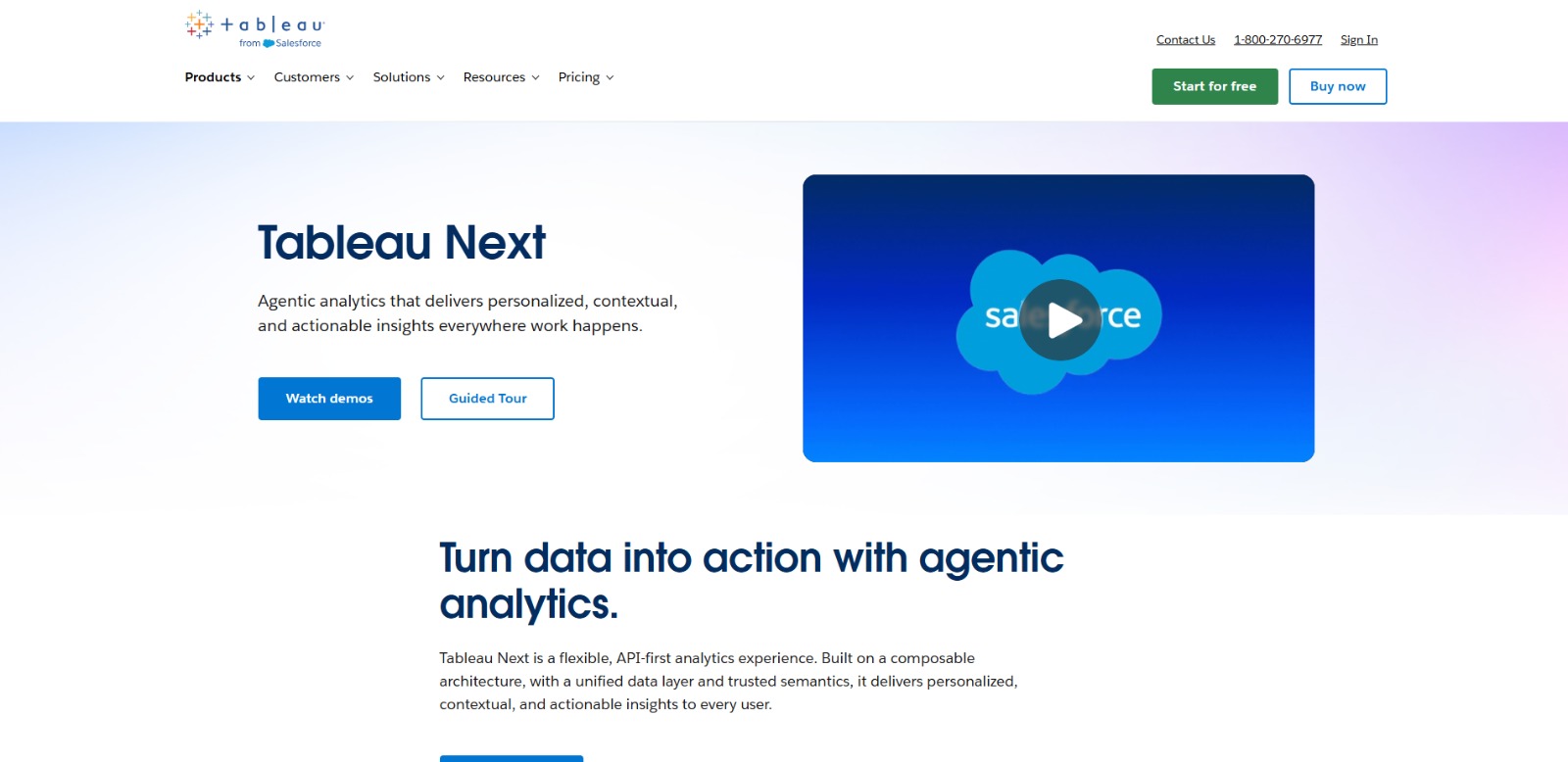
What Is Tableau Next and How Does This AI Tool Help with Data Analysis?
Many professionals find themselves swimming in data, yet struggling to extract truly actionable insights. This often leads to searching for advanced solutions that can cut through the noise and deliver clarity. If you’re asking what is this AI tool, you’re likely looking for a powerful ally to transform your raw data into clear, strategic advantages. This platform represents an evolution in business intelligence, designed to empower users with more than just visualizations.
Understanding Tableau Next is crucial for anyone aiming to leverage cutting-edge tools for better decision-making. It’s not just about seeing your data; it’s about understanding its future implications and automating complex analytical tasks.
This article will guide you through its core purpose and how it addresses the growing demand for sophisticated AI data analysis in today’s fast-paced business environment, ensuring you grasp its enduring value. Once you’re clear on What Is Tableau Next, our Tableau Next Review can help you decide whether it’s worth trying.
The Challenge: Drowning in Data, Thirsty for Insights
In today’s data-rich world, businesses collect vast amounts of information, from customer interactions to operational metrics. However, this abundance often creates a significant challenge: transforming raw, complex datasets into clear, actionable insights. Many current Business Intelligence (BI) tools, while capable of basic reporting and visualization, struggle to keep pace with the sheer volume and velocity of modern data, often requiring extensive manual effort. This leaves data analysts and business leaders feeling overwhelmed, spending countless hours on data preparation and basic analysis rather than focusing on strategic interpretation and innovation.
The core problem isn’t a lack of data, but a deficit of advanced capabilities to truly understand it. Organizations need to move beyond historical reporting to predictive analytics and automated discovery, which traditional tools often lack. Without these sophisticated tools, critical trends remain hidden, potential risks go unnoticed, and valuable opportunities are often missed. This limitation frequently results in slower, less informed decision-making, a reduced competitive advantage, and a constant struggle to extract the deep, actionable intelligence required to drive growth and efficiency in a dynamic and competitive market.
Beyond Basic Reporting: The Need for Predictive Power and Efficiency
For professionals like Alex the Analyst, a common frustration is the limitations of current BI tools that are simply too basic for advanced AI needs within their enterprise. They often spend valuable hours on data wrangling – cleaning, transforming, and preparing data – rather than focusing on deep analysis. This manual, repetitive work not only delays insight generation but also limits their capacity to provide the predictive insights stakeholders truly demand. Communicating complex findings to non-technical audiences also becomes a significant struggle when dashboards lack dynamic, AI-driven explanations.
A critical hurdle is the lack of seamless integration with emerging AI and Machine Learning (ML) models in many existing systems. This gap prevents analysts from leveraging the full potential of modern data science, confining them to reactive reporting instead of proactive forecasting. They observe competitors gaining strategic advantages through advanced analytics, while their own tools leave them unable to answer crucial questions about future market trends, customer behavior, or operational efficiencies. This inability to predict and anticipate significantly impacts strategic planning and competitive positioning in a dynamic market.
The High Cost of Stagnation: Missed Opportunities and Inefficiency
These persistent data challenges carry a significant cost for organizations. The extensive time spent on manual data preparation and basic analysis is time diverted from strategic thinking and innovation, leading to operational inefficiency. This translates directly into slower decision-making, as insights are often delayed or incomplete. In today’s dynamic business landscape, where agility is paramount, any lag in understanding market shifts or customer needs can result in missed opportunities, allowing competitors to swiftly gain a crucial advantage and erode market share.
The absence of advanced AI capabilities and predictive modeling means businesses are frequently forced to make critical decisions based solely on historical data, essentially navigating by looking in the rearview mirror. This approach leads to lower quality forecasts and strategic plans, significantly increasing the risk of costly errors. Furthermore, the difficulty in clearly communicating complex, data-driven findings to non-technical executives can foster misunderstandings, create internal friction, and ultimately undermine the vital buy-in needed for successful data-driven initiatives, impacting the organization’s bottom line and competitive standing.
Tableau Next: Your Smart Ally for Intelligent Data Discovery
It’s clear that the traditional approach to data analysis often leaves professionals feeling like they’re trying to find a needle in a haystack, blindfolded. But what if you had a super-powered magnet and a clear map? That’s precisely where Tableau Next steps in as your intelligent data partner. This platform isn’t just another tool; it’s an evolution, designed to pull you out of the data deluge and into a realm of clear, actionable foresight. It’s the practical fix for those gnawing pain points of manual effort and missed opportunities.
This AI solution empowers you to move beyond simply reporting on what has happened to confidently predicting what will happen. It transforms the daunting task of sifting through mountains of information into an intuitive journey of discovery, making sophisticated AI data analysis accessible and impactful. If you’re wondering what is this AI tool truly capable of, think of it as your co-pilot for smarter, faster, and more strategic business decisions, ensuring you’re always a step ahead.
How Tableau Next Transforms Your Data Workflow
Imagine a workflow where your data practically tells you its secrets, rather than you having to pry them out. Tableau Next streamlines the entire analytical process, making it more intuitive and powerful for users across various skill levels. Here’s a general overview of how you can typically leverage this platform to unlock deeper insights and drive better outcomes.
1. Connecting and Harmonizing Your Data
The first step is bringing all your valuable information together. Tableau Next is designed to seamlessly connect with a wide array of data sources, whether they’re cloud-based databases, spreadsheets, or enterprise systems. This means you can consolidate disparate datasets into a unified view without the usual headaches of complex integrations. The platform then assists in harmonizing this data, preparing it for analysis by identifying relationships and structures.
This initial phase is crucial because clean, well-integrated data forms the foundation for reliable insights. Instead of spending endless hours on manual data wrangling, this AI solution helps automate much of the preparation, allowing you to focus on the analysis itself. It’s like having a digital assistant meticulously organize your files before you even begin your research.
2. Exploring and Discovering with AI Assistance
Once your data is connected, the real fun begins: exploration! Tableau Next provides an intuitive environment where you can visually interact with your data. But it goes a step further by integrating AI and machine learning capabilities directly into this discovery process. As you explore, the platform can proactively suggest relevant visualizations, identify hidden patterns, and even flag anomalies that might otherwise go unnoticed.
This intelligent assistance helps you uncover insights much faster than traditional methods. It’s like having an expert analyst looking over your shoulder, pointing out interesting trends and potential areas for deeper investigation. You’re not just passively viewing data; you’re actively engaging with it, guided by smart suggestions that accelerate your understanding.
3. Performing Advanced AI-Driven Analysis
This is where Tableau Next truly shines for those seeking predictive power. Beyond basic reporting, the platform allows you to apply sophisticated AI and machine learning models to your datasets. You can perform predictive analytics to forecast future trends, conduct segmentation analysis to understand customer groups, or even run scenario simulations to assess potential business impacts.
The beauty here is that you don’t need to be a data scientist to leverage these advanced capabilities. The tool abstracts away much of the underlying complexity, providing guided experiences and automated model selection. This empowers business users and analysts alike to ask more complex questions and receive intelligent, data-driven answers that inform strategic planning.
4. Visualizing Insights and Storytelling
What good are brilliant insights if they can’t be easily understood? Tableau Next excels at transforming complex analytical findings into clear, compelling visualizations and interactive dashboards. You can create dynamic reports that allow stakeholders to explore data on their own terms, drilling down into details or viewing high-level summaries.
Crucially, the platform also aids in “data storytelling,” helping you articulate the narrative behind your numbers. This makes it far easier to communicate complex findings to non-technical audiences, fostering better understanding and buy-in for data-driven initiatives. It turns raw data into a compelling story that resonates with everyone.
5. Collaborating and Acting on Intelligence
Finally, insights are most powerful when shared and acted upon. Tableau Next facilitates collaboration, allowing teams to share dashboards, reports, and analytical findings securely. You can comment, discuss, and collectively explore data, ensuring everyone is on the same page and working with the most current intelligence.
This collaborative environment ensures that data-driven decisions are not made in silos but are integrated into the broader organizational strategy. By making insights readily available and understandable across departments, the platform helps accelerate decision-making cycles and ensures that the valuable intelligence derived from your data translates into tangible business actions.
The Enduring Value: Smarter Decisions, Greater Efficiency
The real magic of Tableau Next lies in its ability to transform the daily grind of data analysis into a strategic advantage. By automating tedious data preparation and infusing AI into the discovery process, it liberates valuable time for analysts and business leaders. This means less time wrestling with spreadsheets and more time focusing on what truly matters: interpreting insights, strategizing, and innovating. The efficiency gains are not just marginal; they are foundational, allowing organizations to operate with unprecedented agility.
Ultimately, this platform empowers you to make smarter, more confident decisions. Moving beyond historical reporting, you gain access to predictive insights that illuminate future possibilities and potential risks. This foresight is invaluable in a competitive market, enabling proactive strategies rather than reactive responses. With clearer communication of complex findings, you foster a truly data-driven culture, ensuring that every decision, from operational adjustments to grand strategic shifts, is backed by robust, intelligent analysis.
Tableau Next stands out as more than just a software; it’s a strategic asset designed to fundamentally change how organizations interact with their data. Its enduring value lies in its ability to demystify complex information, transforming raw numbers into clear, actionable intelligence. By automating data preparation and infusing AI into every step of the analytical journey, this platform frees up valuable human potential, allowing teams to focus on strategy and innovation rather than manual wrangling.
For business analysts, team leaders, and decision-makers grappling with data overload, understanding what this AI tool is and its capabilities is crucial for future success. It’s built for those who seek to move beyond reactive reporting to proactive, predictive insights. Choosing a solution like Tableau Next means investing in a future where smarter decisions are the norm, efficiency is maximized, and a truly data-driven culture flourishes, empowering your organization to navigate the complexities of the modern business landscape with confidence and clarity.
Ready to Transform Data Overload into Actionable Foresight?
If you’ve ever felt buried under a mountain of data, struggling to extract meaningful insights or predict what’s next, you know the frustration. Tableau Next offers a clear path forward, transforming that data deluge into a powerful stream of actionable intelligence.
Imagine a workflow where complex analysis is simplified, where AI guides your discoveries, and where every decision is backed by robust, predictive insights. This platform isn’t just about analyzing data; it’s about empowering you to lead with confidence, innovate faster, and secure a competitive edge by truly understanding the story your data wants to tell. It’s time to move from uncertainty to clarity, making your data your most strategic asset.
Ready to experience the future of data analysis and unlock unparalleled insights for your business? Dive deeper into Tableau Next and see how its intelligent capabilities can revolutionize your approach to data.
Tableau Next FAQs
What is Tableau Next primarily used for?
What is Tableau Next primarily used for?
Who can benefit most from using Tableau Next?
Who can benefit most from using Tableau Next?
How does Tableau Next generally work with AI?
How does Tableau Next generally work with AI?
Is Tableau Next suitable for users without a data science background?
Is Tableau Next suitable for users without a data science background?
CharlieAITools was created with love to help you discover the best AI tools and transform your life, your ideas, and your projects. We aim to share valuable resources with fellow entrepreneurs. Thanks a ton for your support!