What Is Google Flow? Key Features, Use Cases, and Benefits Explained
In today’s fast-paced digital world, creators, marketers, and innovators constantly seek ways to bring their visions to life faster and with greater impact. The demand for high-quality visual content, from stunning videos to captivating images, has never been higher.
This often leads professionals to explore cutting-edge solutions, prompting questions like, “what is this AI tool that can help?” Google Flow is a platform designed to empower your creative journey, offering a suite of intelligent tools to transform ideas into reality. Understanding this powerful AI solution is key to unlocking new possibilities in your projects.
Whether you’re a seasoned digital artist or just starting, grasping how it streamlines complex tasks and enhances creative output can be a game-changer. This article will guide you through the essentials of Google Flow, helping you see how it leverages advanced generative AI for video, image creation, and custom tool development to elevate your work. Now that you know What Is Google Flow, explore our Google Flow Review for a practical breakdown of its strengths and limitations.
The Time-Consuming Reality of High-Quality Visual Content Creation
For many creative professionals, the journey from a brilliant concept to a polished visual asset is often fraught with challenges. Crafting high-quality video content, for instance, typically demands significant time, specialized software, and a deep understanding of complex editing techniques.
From storyboarding and shooting to intricate post-production, each step can be a bottleneck, slowing down project timelines and consuming valuable resources.This manual intensity can stifle innovation and make it difficult to meet tight deadlines. Similarly, generating consistent and realistic AI images, or even editing existing ones to perfection, often requires a blend of artistic skill and technical proficiency.
Achieving the desired aesthetic, ensuring brand consistency, and iterating on designs can become a laborious process. Without the right tools, creators frequently encounter hurdles in translating their precise vision into digital reality, leading to compromises in quality or an exhaustive investment of effort. These core challenges highlight a universal need for more efficient and intuitive creative solutions.
Navigating Technical Barriers and the Quest for Creative Control
Beyond the sheer time commitment, creators often grapple with significant technical barriers. Mastering a myriad of professional software applications, each with its own steep learning curve, can be daunting. Complex visual effects, advanced editing techniques, or even subtle refinements in images and videos often require specialized knowledge that not every artist possesses.
This technical hurdle can prevent brilliant ideas from ever seeing the light of day, or force creators to outsource, adding to project costs and complexity. Another common frustration stems from the inherent inflexibility of many existing creative tools.
While powerful, they often operate within predefined parameters, making it difficult to achieve truly unique or highly customized outputs. Translating a complex, nuanced idea into a visual reality is frequently hampered by tools that offer limited customization. This lack of granular control over AI outputs, or the inability to build bespoke solutions for specific workflows, can feel incredibly restrictive.
The constant need for specialized tools for unique creative tasks further complicates matters. Instead of a streamlined workflow, creators often find themselves juggling multiple platforms, each designed for a singular purpose. This fragmented approach not only adds to the cognitive load but also introduces inefficiencies, making it challenging to maintain consistency and cohesiveness across diverse projects. The desire for an integrated, adaptable environment is a recurring theme among those pushing creative boundaries.
Why These Creative Roadblocks Impact Your Projects and Potential
These creative roadblocks aren’t just minor inconveniences; they translate directly into significant costs and missed opportunities. Wasted hours spent on manual adjustments or wrestling with complex software directly impacts project timelines and budgets. For independent creators and small studios, every minute counts, and inefficiencies can mean the difference between landing a new client or falling behind competitors who are leveraging more advanced tools.
The sheer effort required can also lead to burnout and creative blocks. Moreover, the struggle to achieve desired artistic outcomes due to technical limitations or inflexible tools can severely compromise the quality and originality of your work. When you’re forced to simplify a vision because the tools can’t keep up, the final product often lacks the impact and uniqueness it could have had.
This can lead to lower engagement, less effective marketing campaigns, or a diminished portfolio, directly affecting your professional reputation and growth potential. Ultimately, these frustrations limit creative freedom and exploration. The energy spent overcoming technical hurdles is energy not spent innovating, experimenting, or pushing artistic boundaries.
This operational inefficiency doesn’t just slow down production; it can stifle the very inspiration that drives creative work. In a rapidly evolving digital landscape, the inability to quickly adapt, customize, and iterate on ideas means falling behind, making the choice of intuitive, powerful tools more critical than ever.
Google Flow: Your AI Co-Pilot for Streamlined Visual Creation
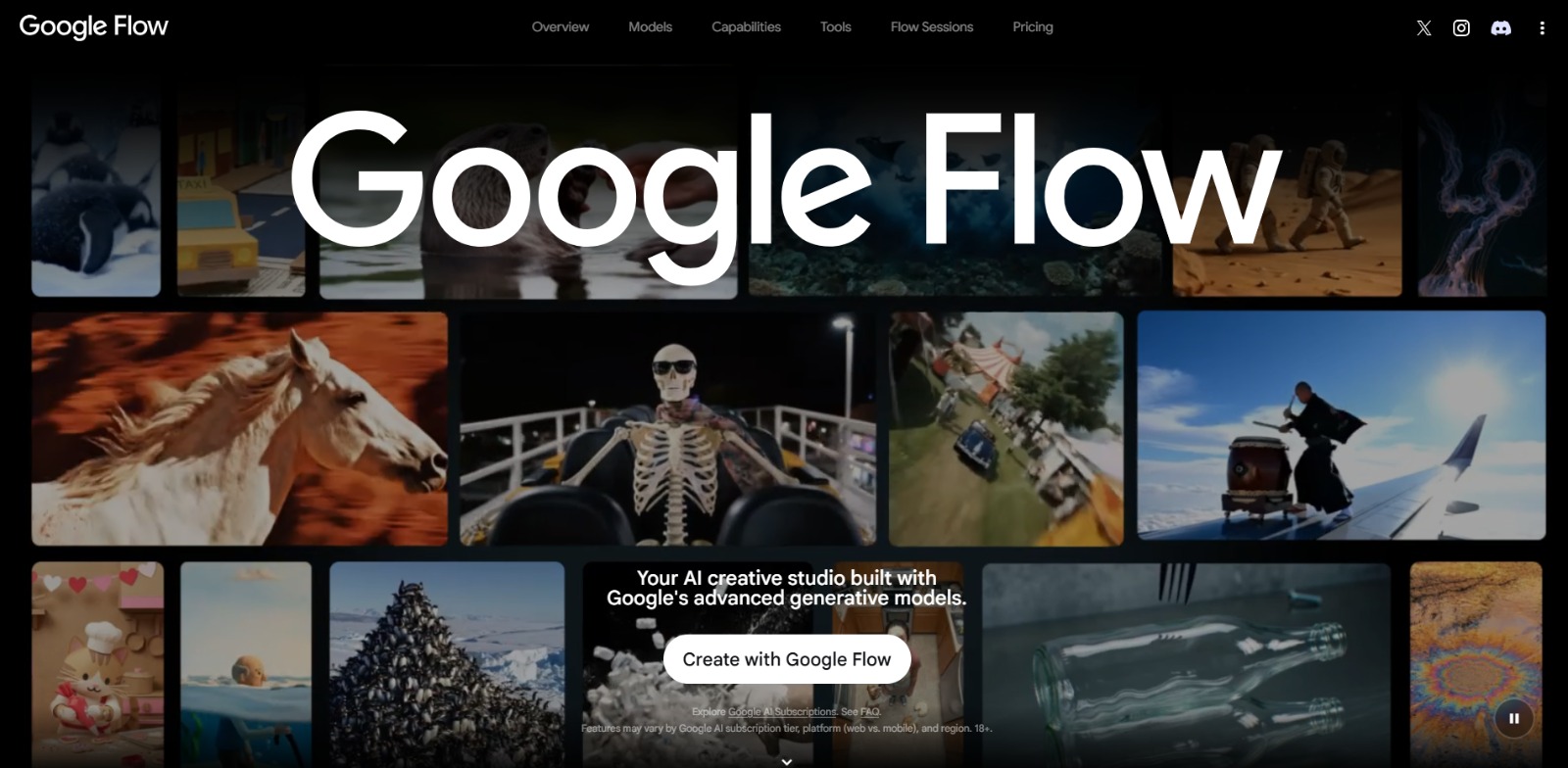
If you’ve been asking “what is this AI tool that promises to revolutionize creative work,” Google Flow steps forward as the intuitive answer to the challenges faced by modern creators. It’s designed to dissolve the bottlenecks of traditional content production, transforming complex, time-consuming tasks into efficient, enjoyable processes. Imagine a world where your most ambitious visual ideas, from dynamic videos to stunning images, can leap from concept to reality without the usual technical headaches or endless hours of manual labor, freeing you to innovate.
This platform acts as your dedicated creative hub, leveraging advanced generative AI to empower you. It directly addresses the frustrations of fragmented workflows, the steep learning curves of specialized software, and the quest for greater creative control.
By providing a unified environment for video, image generation, and even custom tool development, Google Flow aims to simplify the intricate dance of visual content creation, making high-quality output accessible to everyone, regardless of their technical expertise, and allowing you to focus on the art of storytelling itself.
Unlocking Creativity: How Google Flow Transforms Your Process
Google Flow operates on a user-centric principle, designed to make the power of generative AI accessible and intuitive for everyone. At its core, the platform takes your creative intent and translates it into high-quality visual assets.
Think of it as having a highly skilled digital assistant ready to bring your ideas to life, whether you’re starting from scratch or refining existing content The process typically begins with your vision, which you communicate to the AI through various inputs, making it incredibly flexible.
Defining Your Vision
The first step in using Google Flow is to articulate your creative vision. This usually involves providing prompts in the form of text descriptions, much like telling a story to an artist.
You might describe a scene for a video, specify the mood and elements for an image, or outline the functionality for a custom creative tool. The more detailed and descriptive your input, the better the AI can understand and execute your request.
Some workflows may also allow for image or video inputs to guide the generation process, acting as a visual starting point.
AI-Powered Generation
Once your vision is clear, Google Flow’s advanced generative AI models spring into action. For video creation, the platform can generate sequences, animate characters, or apply stylistic transformations based on your prompts.
If you’re focusing on images, it can conjure photorealistic scenes, abstract art, or specific visual elements, ensuring consistency and quality. The beauty here is that the AI handles the complex technical aspects, from rendering to composition, allowing you to focus purely on the creative direction without getting bogged down in software intricacies.
Iterate and Refine
Creativity is rarely a one-shot deal, and Google Flow understands this. After the initial generation, you’re not left with a “take it or leave it” result.
Instead, the platform provides robust tools for iteration and refinement. You can adjust parameters, modify prompts, or use intuitive editing interfaces to fine-tune the output.
This could involve altering colors, changing camera angles in a video, adding or removing elements from an image, or even tweaking the behavior of a custom tool. This iterative feedback loop ensures you maintain granular control over the final product, aligning it perfectly with your original intent.
Deploying Your Masterpiece
Finally, once you’re satisfied with your generated video, image, or custom tool, Google Flow facilitates easy export and integration into your existing workflows. Whether you need a high-resolution image for a marketing campaign, a polished video for social media, or a specialized AI-powered utility for a unique project, the platform ensures your output is ready for use.
This seamless transition from creation to application means your innovative content can quickly reach its intended audience, maximizing your creative output and impact.
Experience Enhanced Creativity and Efficiency with Google Flow
Integrating Google Flow into your creative workflow brings a cascade of benefits that directly address the pain points of modern content creation. Foremost among these is a dramatic increase in efficiency.
By automating the most time-consuming aspects of video and image generation, the platform frees up countless hours previously spent on manual editing, rendering, or complex software navigation.
This means faster project turnaround times, the ability to tackle more projects simultaneously, and ultimately, a significant boost to your overall productivity and output quality.
Beyond speed, Google Flow empowers creators with unprecedented creative freedom and control.
The ability to quickly iterate on ideas, generate diverse visual options from simple prompts, and refine outputs with intuitive tools means your vision is no longer limited by technical skill or software complexity.
It democratizes high-quality content creation, allowing you to experiment, innovate, and bring truly unique concepts to life, enhancing the originality and impact of your work without the usual technical barriers.
Unleash Your Creative Vision, Unburden Your Workflow
So, if you’ve been pondering “what is this AI tool” that promises to elevate your creative game, Google Flow stands out as a powerful answer. It’s not just another piece of software; it’s a strategic partner for anyone looking to produce high-quality visual content without the traditional hurdles.
This platform’s durable value lies in its ability to democratize advanced generative AI, making sophisticated video and image creation accessible to a much broader audience.
Ideal users for Google Flow are creative professionals, marketers, educators, and even passionate hobbyists who often find their innovative ideas constrained by technical complexities or time-consuming manual processes. It’s for those who crave efficiency, seek greater creative control, and wish to transform ambitious visions into tangible assets with remarkable ease.
Understanding Google Flow means recognizing a shift towards a more intuitive, less technically demanding creative landscape, where your focus can truly remain on storytelling and artistic expression.
Imagine a world where your most ambitious creative projects are no longer limited by technical skill or the ticking clock. Google Flow is designed to be that catalyst, transforming the way you approach visual content.
It frees you from the tedious, repetitive tasks that often stifle creativity, allowing you to pour your energy into innovation and storytelling. This isn’t just about making things faster; it’s about making your creative process more joyful, more expansive, and ultimately, more impactful.
By embracing Google Flow, you’re not just adopting a new tool; you’re stepping into a future where your ideas can leap from your imagination to reality with unprecedented ease and quality.
It’s about regaining control, enhancing your output, and experiencing the pure joy of creation without the usual frustrations. Ready to see what you can truly achieve when the technical barriers are lifted?
Ready to transform your creative process and bring your visions to life? Discover Google Flow today.
Google Flow FAQs
What are the primary uses of Google Flow?
What are the primary uses of Google Flow?
Who can benefit most from Google Flow?
Who can benefit most from Google Flow?
How does Google Flow generally transform ideas into visuals?
How does Google Flow generally transform ideas into visuals?
Is Google Flow accessible for beginners?
Is Google Flow accessible for beginners?
CharlieAITools was created with love to help you discover the best AI tools and transform your life, your ideas, and your projects. We aim to share valuable resources with fellow entrepreneurs. Thanks a ton for your support!