
What Is Stable Fast 3D and How Does This AI Tool Help Generate 3D from Image?
If you’ve ever wondered what is Stable Fast 3D, you’re likely searching for a smarter, quicker way to bring your creative visions to life in three dimensions. This innovative AI solution is designed to tackle one of the biggest bottlenecks in digital content creation: the time and complexity involved in generating 3D models. It offers a powerful approach to transforming simple 2D inputs into detailed 3D assets with remarkable speed.
Understanding Stable Fast 3D is crucial for anyone looking to streamline their workflow, whether you’re an indie game developer, an architect, or a product designer. This platform represents a significant leap forward in making high-quality 3D asset creation more accessible and efficient, particularly for those who need to generate 3D from image sources quickly and without extensive manual modeling expertise. Once you’re clear on What Is Stable Fast 3D, our Stable Fast 3D Review can help you decide whether it’s worth trying.
The Challenge of Traditional 3D Asset Creation
For years, creating high-quality 3D models has been a notoriously time-consuming and expensive endeavor. Traditional 3D modeling software requires specialized skills, extensive training, and often, countless hours of meticulous work from experienced artists. This process involves everything from sculpting and texturing to rigging and rendering, each step adding to the overall project timeline and budget. For professionals in fields like game development, virtual reality, or architectural visualization, these bottlenecks can severely impact project deadlines and creative iteration cycles.
The demand for 3D content is constantly growing, but the resources to produce it traditionally often fall short. Businesses and individual creators frequently face the dilemma of needing unique, high-fidelity 3D assets versus the practical limitations of time, cost, and available talent. This struggle is particularly acute when projects require a large volume of diverse 3D objects, making the traditional pipeline unsustainable for rapid development or prototyping.
Beyond Time: Other Hurdles in 3D Content Production
Beyond just the sheer time investment, creators often grapple with the difficulty of converting existing 2D concepts or images into usable 3D models. Imagine Alex, an indie game developer, with a fantastic collection of 2D concept art for characters and props. Traditionally, translating these flat images into fully realized 3D assets would demand a complete rebuild, requiring Alex to learn complex software or hire an expensive 3D artist. This gap between 2D vision and 3D reality is a significant frustration.
Another common hurdle is the need for specialized software and the steep learning curve associated with it. Many professional 3D tools are powerful but intimidating for beginners or those without dedicated training. This creates a high barrier to entry for rapid prototyping or quick design iterations, limiting creative freedom and slowing down the exploration of new ideas. The constant pressure to learn new software or techniques can divert focus from core creative tasks.
Why These 3D Challenges Are More Than Just Annoying
These persistent challenges in 3D asset creation aren’t just minor inconveniences; they have profound impacts on project success and creative potential. Lost time directly translates to missed deadlines, delaying product launches, game releases, or architectural presentations. For businesses, this can mean losing market share to competitors who can bring their 3D-rich experiences to users faster. The high cost of traditional methods often forces creators to compromise on quality or quantity, leading to less immersive or visually appealing final products.
Furthermore, the complexity and expense can stifle innovation and creative experimentation. When every 3D asset requires a significant investment of time and money, designers are less likely to experiment with multiple iterations or explore unconventional ideas. This can lead to creative blocks and a reluctance to push boundaries, ultimately resulting in less unique and engaging content. The inability to quickly generate 3D from image sources means that great 2D concepts might never fully realize their potential in a 3D space.
These frustrations also contribute to operational inefficiency. Teams spend valuable hours on repetitive modeling tasks that could be better utilized for core design, narrative development, or strategic planning. The reliance on highly specialized skills can create bottlenecks in the production pipeline, where progress grinds to a halt if a key 3D artist is unavailable. Ultimately, these problems limit accessibility, making advanced 3D creation a privilege rather than a widely available tool for innovation.
Stable Fast 3D: Your Bridge from 2D Vision to 3D Reality
After wrestling with the complexities and time sinks of traditional 3D creation, it’s refreshing to discover a solution that truly understands your pain. This is precisely where Stable Fast 3D steps in. It’s not just another piece of software; it’s an intelligent assistant designed to demolish those frustrating barriers between your brilliant 2D concepts and their fully realized 3D forms. By leveraging advanced AI, this platform offers a streamlined, efficient pathway to generate 3D from image inputs, transforming what was once a monumental task into a surprisingly manageable one.
For anyone asking, “what is this AI tool?” in the context of accelerating their creative output, Stable Fast 3D is the answer. It empowers a diverse range of users—from indie game developers needing rapid asset creation, to product designers seeking quick prototypes, and architects visualizing concepts—to bypass the steep learning curves and extensive manual labor typically associated with 3D modeling. This AI solution makes high-quality 3D asset generation more accessible, faster, and significantly less resource-intensive, allowing you to focus more on creativity and less on technical hurdles.
Unlocking 3D Creation: How Stable Fast 3D Generally Works
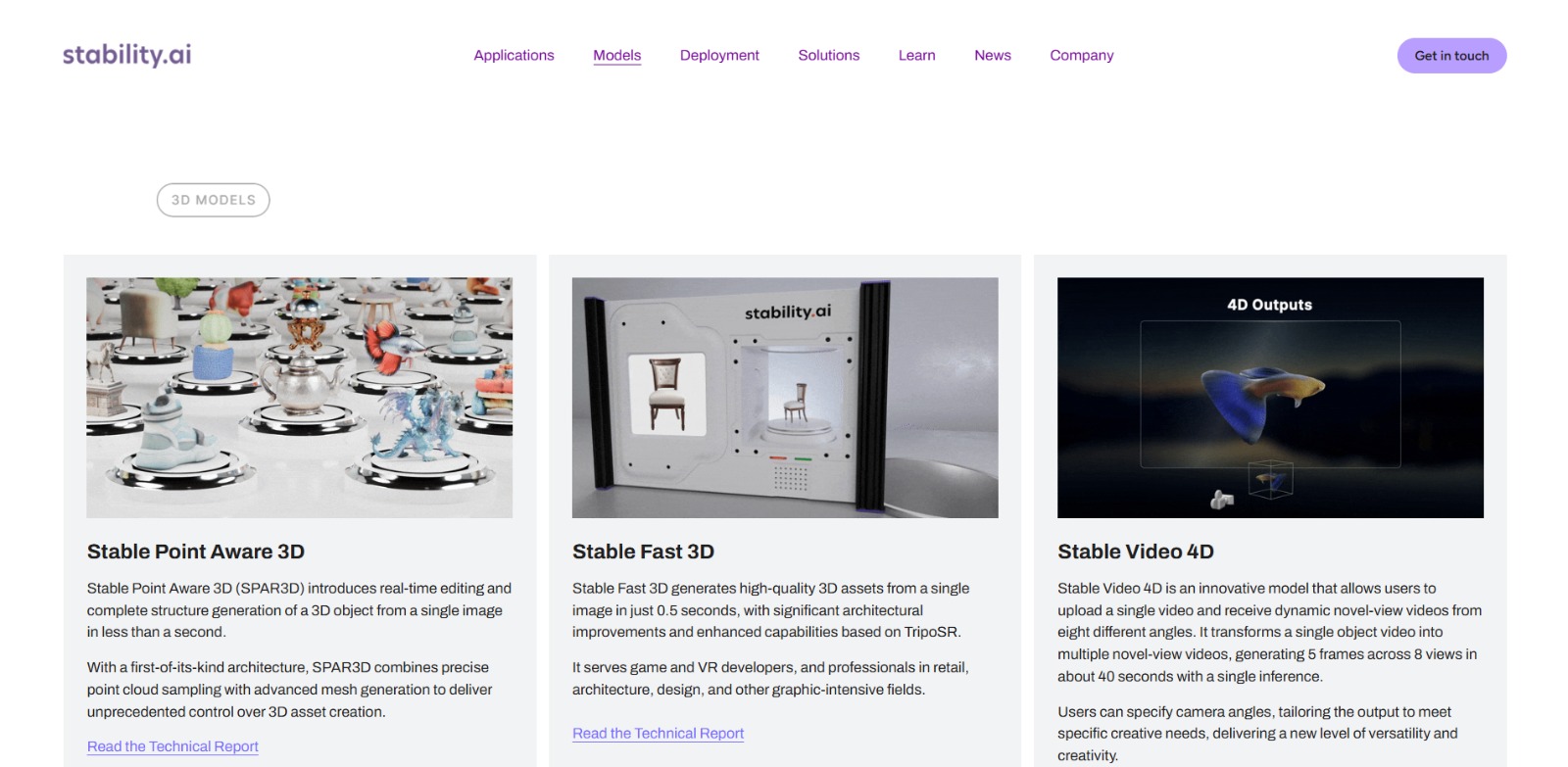
At its core, Stable Fast 3D simplifies the intricate process of 3D modeling by automating much of the heavy lifting. Imagine you have a fantastic 2D sketch or a photograph of an object you want to bring into a 3D environment. Instead of painstakingly recreating it from scratch, this platform acts as your digital sculptor, interpreting your visual input and constructing a three-dimensional representation. The general workflow is designed to be intuitive, guiding users through a few key steps to transform their ideas into tangible 3D assets.
Starting Your 3D Journey: Inputting Your 2D Image
The journey with Stable Fast 3D typically begins by providing the AI with your source material: a 2D image. This could be anything from a detailed concept drawing of a character, a simple photograph of an everyday object, or even a texture map. Users usually upload their chosen image directly to the platform. The AI is engineered to accept various visual inputs, making it incredibly versatile for different creative needs. This initial step is straightforward, ensuring that even those new to 3D generation can get started without a hitch.
The AI Magic: Processing and Interpretation
Once your 2D image is uploaded, the real magic of Stable Fast 3D begins. The platform’s advanced AI algorithms spring into action, analyzing the image to understand its inherent depth, form, and spatial relationships. It intelligently interprets the visual cues, such as shading, contours, and perspective, to extrapolate a three-dimensional structure. This is where the “fast” in its name truly shines, as the AI performs complex calculations and model generation in a fraction of the time it would take a human artist, translating your flat image into a volumetric representation.
Refining Your 3D Model: Customization and Output
After the initial 3D model is generated, users often have opportunities to refine and customize it to better suit their project requirements. While the platform excels at automated generation, it typically provides options for adjustments, such as modifying details, optimizing mesh density, or applying different textures. Once satisfied with the result, the model can be exported in various standard 3D file formats, like OBJ, FBX, or GLB. This ensures compatibility with popular 3D software, game engines, and rendering tools, making integration into existing workflows seamless.
Integrating into Your Workflow
The final, crucial step is taking your newly generated 3D model and putting it to work. Whether you’re importing it into a game engine like Unity or Unreal, a CAD program for product design, or a rendering suite for architectural visualization, Stable Fast 3D ensures your assets are ready for immediate use. This seamless integration means less time spent on conversion issues and more time focused on the creative aspects of your project. It’s about empowering you to iterate faster and bring your visions to life with unprecedented efficiency, truly transforming your digital content creation pipeline.
Beyond Speed: The Transformative Benefits of Stable Fast 3D
The advantages of integrating Stable Fast 3D into your creative workflow extend far beyond mere speed. By significantly reducing the time and effort required to generate 3D assets from images, this AI solution unlocks a wealth of benefits. You’ll experience substantial cost savings by minimizing the need for extensive manual modeling or hiring specialized artists for every asset. This newfound efficiency translates directly into faster project completion times, allowing you to meet deadlines with ease and bring your products or experiences to market much quicker than before.
Moreover, Stable Fast 3D dramatically lowers the barrier to entry for high-quality 3D content creation, empowering a broader range of creators who might not possess traditional 3D modeling expertise. This accessibility fosters greater creative freedom, encouraging experimentation with multiple iterations and unconventional ideas without the fear of prohibitive time or cost investments. Ultimately, the platform helps streamline your entire workflow, reduces operational friction, and enables you to focus on core design and narrative, leading to more immersive, visually appealing, and ultimately, more successful outcomes.
Stable Fast 3D: Empowering Your Creative Evolution
So, you’ve journeyed with us through the ins and outs of Stable Fast 3D, and by now, you probably have a much clearer picture of what this AI tool brings to the table. It’s more than just a piece of software; it’s a strategic partner for anyone looking to bridge the gap between their 2D vision and a fully realized 3D world. Its durable value lies in its ability to democratize 3D creation, making it accessible, efficient, and less daunting for a wide array of professionals.
Ideal users range from indie game developers needing to populate virtual worlds quickly, to product designers iterating on prototypes, and architects visualizing complex structures. The key decision factor often boils down to time, cost, and the desire for creative agility. Understanding Stable Fast 3D means recognizing a powerful ally that can significantly streamline workflows, reduce operational friction, and ultimately, free you up to focus on the truly creative aspects of your projects, rather than getting bogged down by technical hurdles.
Ready to Transform Your 2D Visions into 3D Realities?
Imagine a world where your creative ideas aren’t limited by the steep learning curves or time-consuming processes of traditional 3D modeling. Stable Fast 3D offers that world, empowering you to move from concept to creation with unprecedented speed and ease. It’s about reclaiming your time, expanding your creative horizons, and bringing your most ambitious projects to life faster than you ever thought possible. Don’t let technical barriers hold back your brilliance any longer.
Take the leap and discover how Stable Fast 3D can revolutionize your creative workflow today.
Stable Fast 3D FAQs
What is Stable Fast 3D used for?
What is Stable Fast 3D used for?
Who is Stable Fast 3D best for?
Who is Stable Fast 3D best for?
How does Stable Fast 3D generally work?
How does Stable Fast 3D generally work?
Is Stable Fast 3D beginner-friendly?
Is Stable Fast 3D beginner-friendly?
CharlieAITools was created with love to help you discover the best AI tools and transform your life, your ideas, and your projects. We aim to share valuable resources with fellow entrepreneurs. Thanks a ton for your support!