
What Is Zapier AI and How Does It Help with AI Agents?
Many businesses today are looking to leverage artificial intelligence to boost efficiency, but the path to integrating AI can often feel complex and fragmented. You might be searching for a way to connect powerful AI tools with your everyday applications without needing a team of developers. This is where understanding what is Zapier AI becomes crucial. It’s designed to bridge the gap between AI capabilities and practical business automation, making advanced technology accessible.
In a world where every minute counts, the ability to automate tasks and create intelligent systems is a significant competitive advantage. This article will demystify Zapier AI, explaining how it acts as an orchestration layer for various AI services. We’ll explore how it empowers you to build custom AI agents that can take action across thousands of applications, streamlining operations and freeing up valuable human potential. Now that you know What Is Zapier AI, explore our Zapier AI Review for a practical breakdown of its strengths and limitations.
The Challenge of Fragmented AI Tools in Business
In today’s fast-paced business environment, many organizations recognize the immense potential of Artificial Intelligence. From generating content to analyzing data and automating customer support, AI offers transformative power. However, a significant hurdle often arises: the sheer number of specialized AI tools available, each designed for a specific purpose. Integrating these disparate tools into a cohesive, functional workflow can feel like trying to connect puzzle pieces from different sets. Businesses frequently find themselves with powerful AI capabilities that operate in isolation, unable to communicate or share data seamlessly with their existing applications.
This fragmentation creates a bottleneck, preventing businesses from fully realizing AI’s benefits. Operations managers and IT leads often face the daunting task of manually transferring data between AI services and other business software, or attempting complex custom integrations that demand specialized coding skills and significant resources. The promise of AI-driven efficiency turns into a frustrating exercise in managing disconnected systems, leading to wasted time, increased operational costs, and a slower pace of innovation. Without a unified approach, the true power of AI remains locked away in silos.
Beyond Integration: The Hurdles of AI Governance and Scalability
Beyond the initial challenge of connecting AI tools, businesses encounter further complexities related to governance and scalability. Implementing AI solutions often introduces concerns about data security and compliance, especially when sensitive information is processed across multiple platforms. Operations managers frequently worry about maintaining control over how AI interacts with proprietary data and ensuring that all actions are auditable and secure. Without a centralized system, monitoring AI usage and ensuring adherence to internal policies or external regulations becomes an arduous, if not impossible, task.
Another pressing issue is the difficulty in scaling AI solutions effectively. What works for a small team or a single department might not easily expand to meet the needs of an entire organization. Businesses often struggle to deploy AI agents or chatbots across various functions without encountering performance issues, increased costs, or integration headaches. This lack of scalability means that the initial investment in AI may only yield limited returns, preventing widespread adoption and hindering the potential for significant, company-wide efficiency gains.
Furthermore, the high costs associated with custom AI development and the ongoing maintenance of complex integrations can be a significant barrier. Many businesses, particularly SMBs, lack the budget or in-house expertise to build bespoke AI solutions from scratch. This often leads to a fear of AI implementation failures, where projects become too expensive, too complex, or simply don’t deliver the promised value. The desire to innovate with AI is strong, but the practical realities of cost, complexity, and the need for robust, secure systems often leave businesses feeling overwhelmed and hesitant.
The Real Impact: Why Fragmented AI Leads to Lost Potential
These seemingly technical challenges of fragmented AI tools and integration complexities have profound business consequences. The most immediate impact is a significant drain on operational efficiency. Manual data transfers, troubleshooting disconnected systems, and the constant need for custom coding divert valuable employee time away from strategic initiatives. Instead of focusing on innovation or core business growth, teams are bogged down with the mechanics of making AI work, leading to lost productivity and increased labor costs that erode potential ROI. This means employees are spending less time on high-value tasks and more on administrative overhead.
Moreover, the lack of unified AI orchestration results in missed opportunities and slower decision-making. When AI insights are trapped in isolated applications, or when AI agents cannot trigger actions across different platforms, businesses cannot react quickly to market changes or customer needs. For instance, an AI-powered lead scoring system is less effective if it can’t automatically update a CRM or notify a sales team in real-time. This delay translates into lost sales, reduced customer satisfaction, and a diminished competitive advantage, as agile competitors leveraging integrated AI solutions move faster and smarter.
Finally, the cumulative effect of these problems is a pervasive sense of frustration and a barrier to innovation. Business leaders and teams see the immense potential of AI but feel constrained by the complexity and risk involved. This can stifle experimentation, limit the scope of AI projects, and ultimately prevent the organization from fully embracing the transformative power of artificial intelligence. It’s not just about technical hurdles; it’s about lost potential for growth and the inability to truly automate and optimize.
Zapier AI: Your Orchestration Layer for Intelligent Automation
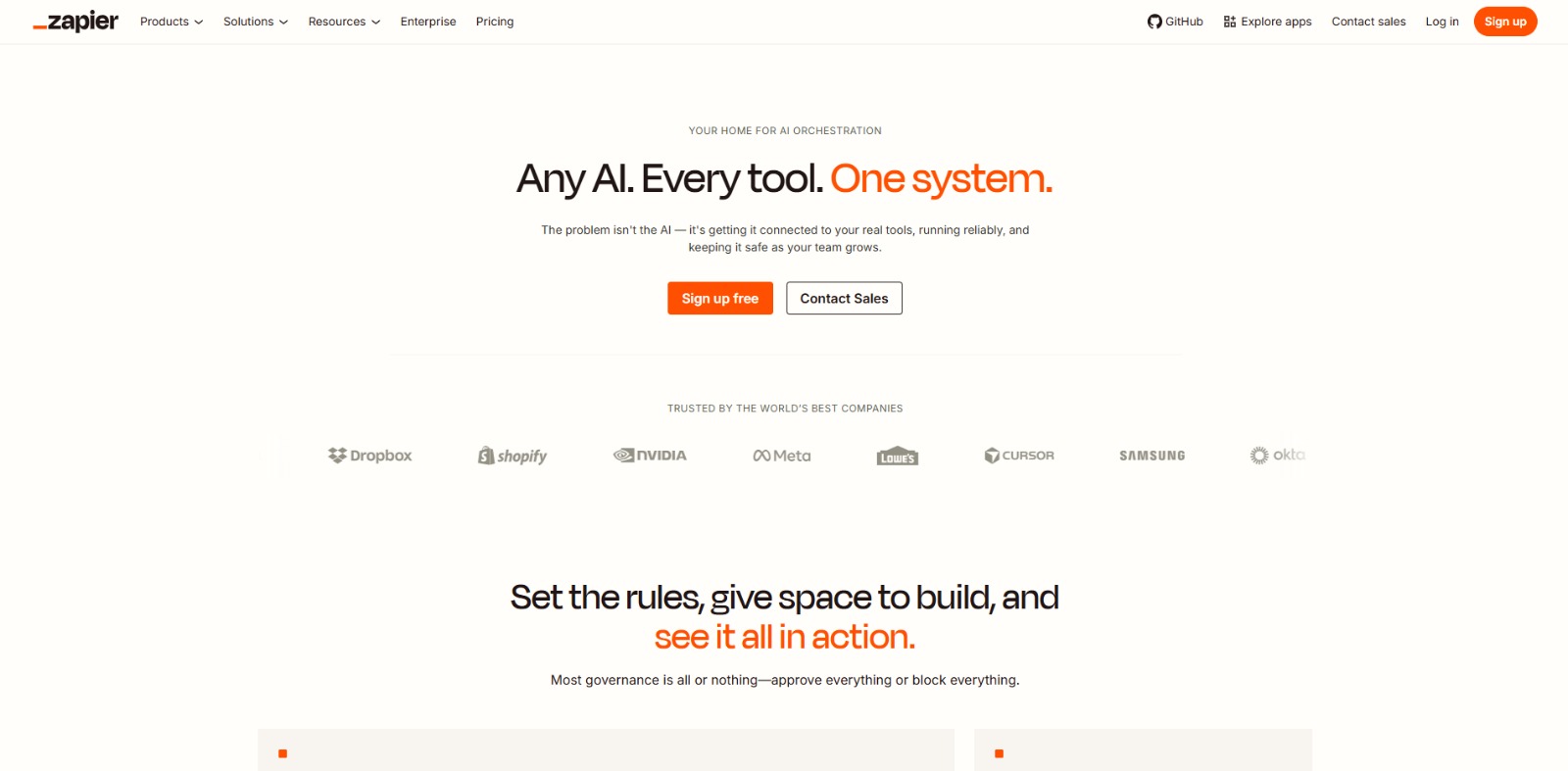
After wrestling with the challenges of disconnected AI tools and the complexities of scaling intelligent operations, you might be wondering if there’s a simpler way to harness AI’s true power. This is precisely where Zapier AI steps in, acting as the much-needed bridge between your innovative AI services and the everyday applications your business relies on. Think of it as the conductor of your AI orchestra, ensuring every instrument plays in harmony, rather than each performing a solo in isolation, finally bringing your AI strategy into a cohesive whole and overcoming the fragmentation we discussed earlier.
Zapier AI is designed to demystify the integration process, transforming the daunting task of connecting disparate AI capabilities into a straightforward, no-code endeavor. It empowers businesses to create sophisticated, custom AI agents that can not only process information but also take meaningful action across thousands of applications. This platform directly addresses “what is this AI tool” by showing how it enables practical, scalable AI solutions without extensive development.
Building Your Intelligent Workflow: How Zapier AI Works in Practice
Understanding the “what” is great, but the real magic happens when you grasp the “how.” Zapier AI simplifies the creation of powerful automated workflows, known as “Zaps,” by allowing you to connect various AI models with your existing business applications. It acts as a universal translator and action-taker, enabling different software to communicate and collaborate intelligently.
This platform empowers you to design custom AI agents that perform tasks tailored to your specific needs, from automating content generation to intelligent data routing, all without needing to write complex code. Let’s walk through the typical process of how you can put Zapier AI to work, transforming manual tasks into smart, automated operations.
1. Identify Your Automation Opportunity
Begin by pinpointing repetitive tasks or data flows that could benefit from AI. This might include summarizing customer feedback, categorizing emails, or drafting initial responses.
Recognizing these bottlenecks, where manual effort is a drain or intelligent analysis provides an advantage, is the crucial first step to building solutions that genuinely solve problems and free up valuable human potential.
2. Connect Apps and AI Capabilities
With your automation goal clear, select the applications involved. Zapier connects to thousands of business tools—CRMs, email platforms, spreadsheets, and more. Integrate specific AI capabilities you need, whether a large language model for text generation, an AI for sentiment analysis, or a specialized tool for data extraction.
Zapier AI provides a flexible framework to bring these diverse components together, acting as your central hub.
3. Define Triggers and Actions
Every automated workflow, or “Zap,” starts with a trigger—an event that kicks off the sequence. This could be a new email, a new spreadsheet row, or a form submission. Following the trigger, you define a series of actions.
These actions involve sending data to an AI tool, processing its output, and then using that output to perform a task in another application. For example, a new customer review (trigger) could be analyzed by AI for sentiment, then a summary posted to a team chat.
4. Configure AI Steps with Prompts
This is where you infuse intelligence. Within your Zap, add steps that leverage AI. For generative AI, craft prompts to guide its output, ensuring it produces desired content or analysis. For classification, provide criteria. Zapier AI allows you to map data from previous steps into your AI prompts, making responses highly relevant and contextual.
This configuration uses intuitive settings, abstracting away underlying technical complexities of interacting with various AI models.
5. Test, Deploy, and Refine
Before going live, thorough testing is essential. Run test data through your sequence to ensure each step, especially the AI components, behaves as expected. Once confident, deploy your Zap, and it will run automatically in the background.
As your needs evolve or you gain insights into AI performance, easily return to your Zap to make adjustments and refinements. This iterative process ensures your automation remains optimized and effective, continually delivering value and adapting to changing requirements.
Unlock Your Potential: The Core Benefits of Zapier AI
The true value of Zapier AI lies in its ability to transform how businesses operate, moving beyond simple integration to intelligent automation. One of the most significant benefits is the dramatic increase in operational efficiency. By automating repetitive, data-heavy tasks that previously required manual oversight or complex custom coding, teams can reclaim countless hours. This means employees are freed from administrative burdens, allowing them to focus on strategic initiatives, creative problem-solving, and high-value interactions that genuinely drive growth and innovation for the business.
Furthermore, Zapier AI significantly reduces the friction associated with adopting advanced AI capabilities. It democratizes access to powerful AI tools, enabling even non-technical users to build sophisticated workflows. This leads to faster decision-making, as AI-driven insights can be automatically routed to the right people at the right time.
The platform also enhances scalability, allowing businesses to deploy AI solutions across departments without the typical headaches of complex infrastructure. Ultimately, this leads to reduced operational costs, improved data consistency, and a more agile, responsive organization ready to leverage the full potential of artificial intelligence.
Zapier AI: Your Gateway to Smarter, Scalable Automation
As we’ve explored, the world of AI tools can feel like a vast, fragmented landscape. But understanding “what is this AI tool” like Zapier AI reveals a powerful solution designed to bring order, intelligence, and efficiency to your operations. It’s not just another AI; it’s the intelligent glue that connects your existing applications with cutting-edge AI capabilities, making sophisticated automation accessible to everyone, regardless of their technical prowess.
Zapier AI stands out by democratizing AI integration, transforming complex processes into straightforward, no-code workflows. Its durable value lies in its ability to free up valuable human potential, allowing teams to shift from repetitive, manual tasks to strategic, creative, and high-impact work.
For any business or individual looking to harness AI’s power without the typical development hurdles, Zapier AI offers a practical, scalable, and remarkably intuitive path forward.
Transform Your Workflow, Unleash Your Team’s Brilliance
Imagine a world where your AI tools don’t just exist in isolation but work together seamlessly, orchestrating intelligent actions across your entire business. Zapier AI offers that future today, empowering you to move beyond manual drudgery and unlock a new level of efficiency and innovation. It’s about giving your team the freedom to focus on creativity, strategy, and truly meaningful work, while the intelligent automation handles the rest.
Ready to stop juggling disconnected AI tools and start orchestrating truly intelligent workflows? Discover how Zapier AI can transform your operations and free your team to focus on what truly matters. Visit Zapier AI today and begin building your smarter future.
Zapier AI FAQs
What is Zapier AI primarily used for?
What is Zapier AI primarily used for?
Who benefits most from using Zapier AI?
Who benefits most from using Zapier AI?
Is Zapier AI suitable for non-technical users?
Is Zapier AI suitable for non-technical users?
What should I consider before integrating Zapier AI?
What should I consider before integrating Zapier AI?
CharlieAITools was created with love to help you discover the best AI tools and transform your life, your ideas, and your projects. We aim to share valuable resources with fellow entrepreneurs. Thanks a ton for your support!